

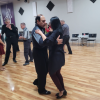


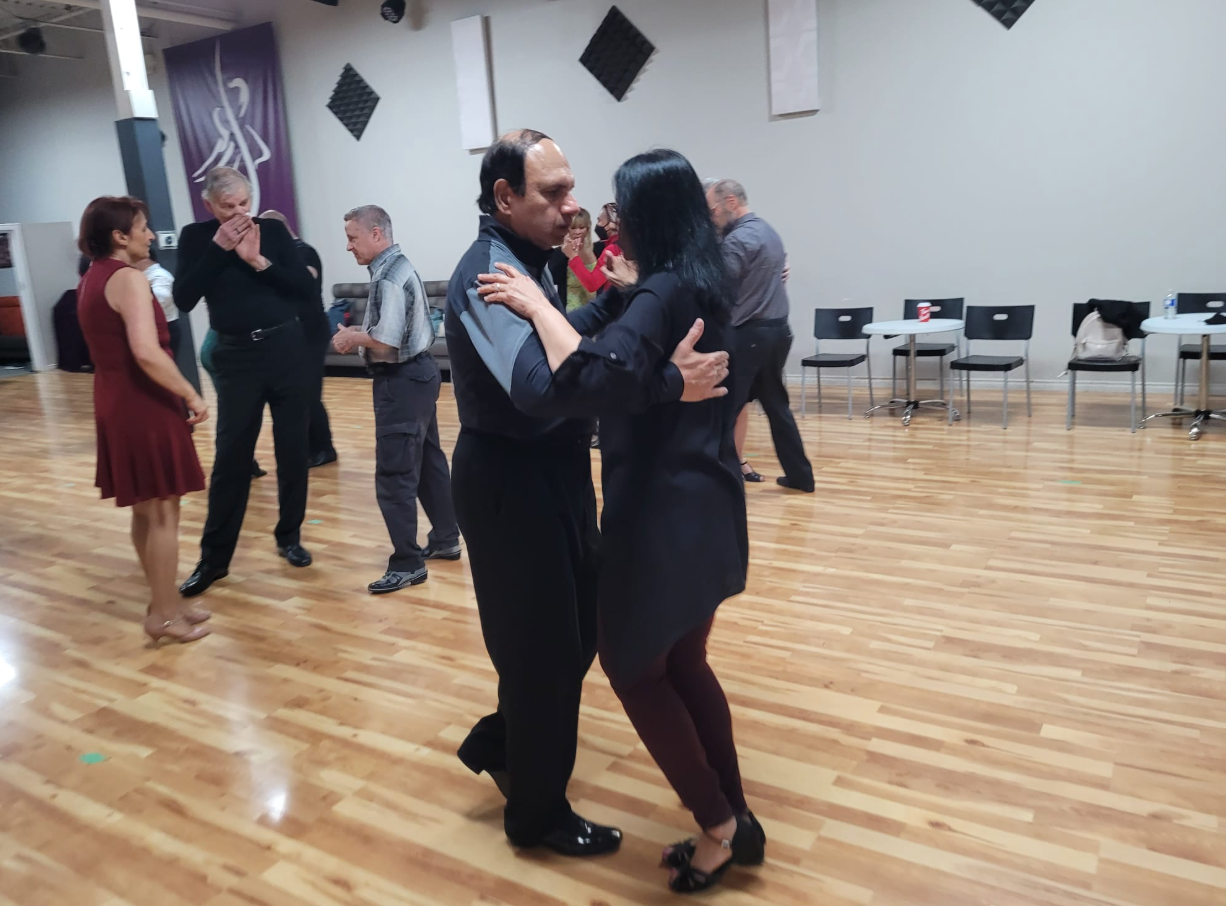
Argentine tango can look almost impossible when you first watch experienced dancers. They move with quiet confidence, change direction without speaking, and respond to the music as if every step was planned in advance. It is easy to assume that the dance requires natural talent, years of childhood training, or exceptional coordination. In reality, Argentine tango for beginners starts with familiar actions such as standing, walking, pausing, listening, and learning how to share movement with another person.
At Tango Canada Academy, we regularly welcome adults who have never taken a dance class and who worry that they are too stiff, too shy, too old, or too uncoordinated to begin. Most discover that the real challenge is not athletic ability. It is learning to slow down, pay attention, and repeat a few essential skills until they feel natural. Argentine tango for beginners can be demanding, but it is also logical, progressive, and deeply rewarding when it is taught in a supportive way.
At Tango Canada Academy, a subsidised “Starter Package” for absolute beginners, singles or couples, priced at $90 for 3 immersive lessons of 90 minutes each ( total time 270 minutes ) is a popular feature offering new Argentine Tango aspirants to get some solid training grounded in BioMechanics and Tango Technique by a professionally qualified and experienced Instructor certified by Canadian Dancesport Federation.
Is Argentine Tango Hard To Learn?
Argentine tango is easy to begin but may take some time to master, and that combination is part of its appeal. A complete beginner can learn a basic posture, transfer weight, walk with a partner, and pause to music during the first few classes. Performing them with balance and clear communication still takes repetition. Argentine tango for beginners therefore provides early wins while still offering years of depth for students who want to keep improving. Students need to make sure they carefully choose their Argentine Tango Instructors with proven experience and Teachers Certifications from recognised Dancesport Federations to enjoy their Tango learning journey over a period of time.
Some instructors, with limited ability and experience only offer teaching Argentine as Figures and Steps only, without much emphasis on Bio Mechanics and correct Tango Technique, this often challenges the students later in their socials / milongas who then struggle to find the right connection and engage in real time improvisation, much needed in the art and floorcrafting of Authentic Argentine Tango and enjoyment of this beautiful, sensual, partner dance style.
The dance may feel harder than a pattern-based activity because social tango is improvised. Instead of memorizing one routine and repeating it, partners make decisions based on the music, available space, and one another’s movement. Beginners instead learn a small set of reliable tools and gradually combine them. Argentine tango for beginners becomes much easier when students stop measuring progress by the number of figures they know.
Simple Movement Can Require Detailed Awareness
Walking is familiar, but tango asks you to notice how you place the foot, where your weight is, whether your posture remains organized, and how your partner receives the movement. This awareness may feel unusual at first, but the dance becomes smoother as those details become habits.
What Makes Tango Challenging At First?
The first challenge is coordinating several tasks at the same time. You may be listening for the beat, remembering posture, controlling your step size, maintaining an embrace, and trying not to bump another couple. Adult learners may interpret this overload as a lack of ability, but it is a normal learning stage. Argentine tango for beginners should reduce the number of tasks, allowing students to practise one clear idea before adding another.
The second challenge is learning communication without relying on spoken instructions or force. Leaders develop clear intention, direction, and timing, while followers develop balance, responsiveness, and active listening. Both roles require patience because movement can feel different with each partner. Argentine tango for beginners is not about controlling another person. It is about making movement understandable and comfortable for both people.
Why Adults Sometimes Overthink Every Step
Adults are used to solving problems intellectually, so they may try to analyse each movement while it is happening. Tango improves when the body receives enough repetition to respond without constant verbal thought. Clear instruction, slow practice, and permission to make mistakes help students move from conscious effort toward physical confidence.
What Adult Beginners Usually Learn First
A strong beginner program starts with posture, balance, weight transfer, walking, and the embrace. Students learn to recognize which foot holds their weight before attempting direction changes or pivots. They also practise stopping with control because a stable pause reveals whether the body is genuinely balanced. These fundamentals determine whether later movement feels calm or rushed. Argentine tango for beginners should treat the walk as an important skill rather than something to hurry past.
Musical timing is introduced early as well. Beginners can start by finding a steady pulse, taking a few steps, and allowing stillness. This helps movement feel connected to the song instead of becoming a mechanical exercise. Argentine tango for beginners becomes more expressive when students understand that they are allowed to pause, breathe, and choose simplicity.
What The First Month May Look Like
During the first four weeks, students may work on walking together, changing direction, maintaining comfortable connection, and beginning simple pivoting concepts. Progress is rarely perfectly even. One class may feel easy and the next may feel confusing, but that variation is normal as the body processes new information.
How Long Before Tango Feels Comfortable?
Many adults begin to feel oriented after six to ten consistent weekly classes. At that point, they may be able to maintain a basic embrace, walk with more control, follow the musical pulse, and complete a song using simple choices. Social confidence takes longer because it involves different partners and floor navigation. Argentine tango for beginners should be measured in months of steady participation rather than days of rushed instruction.
Comfort also depends on frequency. One class every several weeks may require repeated review, while one weekly class plus occasional guided practice keeps the material familiar. Argentine tango for beginners often improves through ten focused minutes of walking and weight transfer more effectively than through an occasional long session filled with complex steps.
A Realistic Progress Timeline
During the first month, expect awareness and basic control. During months two and three, expect more reliable walking, pauses, and simple direction changes. After three to six months, many consistent students feel more relaxed in guided social settings, though every learner progresses at a different pace and no fixed deadline determines success.
Do Age, Fitness, Or Dance Experience Matter?
You do not need to be young, highly flexible, or athletically trained to start. Tango can be adapted to different bodies because it is based on controlled walking and partner communication rather than jumps or acrobatics. Mobility, balance, and stamina may influence pace, but they do not determine who belongs in class. Argentine tango for beginners should offer options that respect physical comfort and allow students to build capacity gradually.
Previous dance, yoga, music, sports, or martial arts experience may provide useful body awareness, but it can also bring habits that need adjustment. Previous experience can also create habits that need adjustment. Complete beginners sometimes progress beautifully because they arrive without expectations. Argentine tango for beginners rewards curiosity and consistency more than any particular background.
Common Mistakes That Make Tango Feel Harder
One common mistake is trying to learn impressive figures before the walk and weight transfer are stable. Complex patterns add mental pressure and can hide problems with balance. Another mistake is using the arms to move a partner instead of organizing intention through the body. Both habits make the dance feel tense. Argentine tango for beginners becomes more comfortable when students choose small steps, relaxed shoulders, and movements that can be stopped safely.The Credentials and Experience of Teachers matters. Check the Reviews of Argentine Tango Instructors before signing off.
Another mistake is comparing yourself with people who have trained for years. Performances show polished results, not the slow practice behind them. Adult learners may also compare themselves with classmates who have different experiences or learning styles. Argentine tango for beginners is personal, and progress should be judged by clearer balance, greater comfort, better listening, and increased enjoyment rather than by competition with someone else.
Seven Ways To Make Learning Easier
Choose a consistent class, arrive early enough to settle in, and focus on one correction at a time. Ask questions when instructions are unclear, then give your body time to experiment. Argentine tango for beginners becomes manageable when each class has a small, practical goal such as walking more quietly or pausing without losing balance.
Your learning environment matters as much as your effort. Supportive teachers explain why a movement works, create respectful partner practices, and avoid making students feel embarrassed for needing repetition. Use the following habits to make Argentine tango for beginners more enjoyable, assuming you find the right capable instructor with proven experience and certifications-
- Attend class consistently instead of taking long breaks.
- Practise weight transfers and slow walking for a few minutes at home.
- Listen to tango music without trying to analyse every detail.
- Wear secure shoes that allow controlled turning.
- Keep steps compact and avoid forcing pivots.
- Attend guided practicas to repeat material in a low-pressure setting.
- Track small improvements rather than waiting for perfection.
Group Classes, Private Lessons, And Guided Practice
Private or Semi Private Lessons provide more individual attention and can be useful when posture, balance, embrace, or timing needs focused correction in an early Tango Learning Journey. Group classes do support the foundation because they provide structure, community, and experience with different partners. Argentine Tango Classes can help students progress through shared material while learning that beginner challenges are normal. For many adults, the best Argentine tango for beginners plan combines regular group learning with occasional private, semi private lessons in between that support in the early grounding of correct Tango Technique and Bio Mechanics so critical for Authentic Argentine Tango learning Journey.
Workshops And Guided Practicas serve a different purpose. Workshops can explore a focused subject, while guided practicas give students time to repeat and ask questions without the pressure of a formal social event. Students with performance goals may later explore Tango Competition Training. Argentine tango for beginners works best when the learning format matches the student’s immediate goal rather than pushing everyone toward the same destination.
A Balanced Weekly Learning Plan
A practical schedule may include one group class each week, one guided practica every week or two, and brief solo practice between sessions. A private lesson can be added when a repeated issue needs individual attention. This combination supports instruction, repetition, feedback, and community without overwhelming a busy adult schedule.
Tango Can Support An Active And Social Routine
Tango involves walking, balance, coordination, attention, and sustained movement, so it can contribute to a more active week. The Government of Canada explains that physical activity can help reduce stress, increase energy, strengthen the heart and lungs, and improve balance and coordination. Its Physical Activity And Your Health page offers general guidance, although each student should choose activity appropriate to their health and abilities. Argentine tango for beginners can be a motivating option because learning and social connection are part of the movement experience.
Tango also introduces students to a cultural community built around music, classes, practicas, and social events. Canadian Heritage’s Building Communities Through Arts And Heritage program highlights the role of local arts and cultural participation in bringing people together. It reflects the broader community value of shared cultural activities. Argentine tango for beginners can therefore become more than a class by offering a meaningful way to participate in local arts and social life.
Why Choose Tango Canada Academy
Tango Canada Academy teaches adult students through a clear, practical approach that respects the complexity of the dance without making it intimidating. We focus on posture, walking, balance, partner communication, musicality, and social awareness so learners understand both what to do and why it matters. Our goal is to make Argentine tango for beginners feel progressive, welcoming, and connected to social dancing.
Students can begin with Argentine Tango Classes, add Private Lessons for personalized correction, and build confidence through Workshops And Guided Practicas. Those who later pursue advanced performance goals can explore Tango Competition Training. This flexible pathway allows each adult learner to choose the level of structure, feedback, and practice that fits their schedule and ambitions while keeping Argentine tango for beginners grounded in strong fundamentals.
Start Tango With Realistic Expectations And Confidence
Argentine tango is challenging because it combines movement, music, communication, and improvisation, but none of those skills must be mastered immediately. Beginners start with standing, walking, shifting weight, and listening. Confidence develops through repetition, supportive feedback, and permission to make mistakes. Argentine tango for beginners is not easy in the sense of requiring no effort, but it is accessible when the learning process is divided into clear stages.
Tango Canada Academy welcomes adults who are ready to try something new, whether they arrive alone, with a partner, or with no dance experience at all. Join Argentine Tango Classes for a structured foundation, use Workshops And Guided Practicas to gain repetition, or book Private Lessons for targeted support. Begin with realistic expectations, stay consistent, and let Argentine tango for beginners become a rewarding part of your week.
Frequently Asked Questions
Adult beginners often worry about age, coordination, partners, clothing, and the time needed to improve. These concerns are normal, especially when tango is presented online through polished performances. A beginner class is very different from a stage show and should introduce movement gradually, with time for questions, repetition, and personal adjustment.
The answers below address the most common questions about Argentine tango for beginners. Individual experiences vary, so speak with the academy about physical concerns, class placement, partner rotation, or learning goals before registering. A clear conversation can help you choose the most comfortable starting format.
1. Is Argentine Tango For Beginners Harder Than Other Partner Dances?
It can feel challenging because it is improvised and connection-focused, but the first movements are accessible. Students begin with walking, balance, and timing rather than long routines, so progress can be built in manageable steps.
2. Do I Need A Partner For Argentine Tango For Beginners?
No. Many beginner group classes welcome individuals and use partner rotation when appropriate. Students who prefer to remain with one partner can ask about class policies or choose private instruction.
3. Am I Too Old To Start Argentine Tango For Beginners?
There is no universal maximum age for starting. Tango can be adapted to different bodies and experience levels, although anyone with health or mobility concerns should seek appropriate professional advice and inform the instructor.
4. How Long Does Argentine Tango For Beginners Take To Feel Natural?
Many consistent students feel more oriented after six to ten weekly classes, while social comfort often develops over several months. Frequency, practice, feedback, and personal goals all influence the timeline.
5. What Should I Wear To Argentine Tango For Beginners Classes?
Wear comfortable clothing that allows a full stride and clean, secure indoor shoes with controlled traction. Specialized tango shoes and formal clothing are not required for the first lesson.
6. Can Private Lessons Make Argentine Tango For Beginners Easier?
Yes. Private coaching can identify personal balance, posture, or connection issues quickly. Many students combine group classes for community with occasional private lessons for targeted correction.
7. What Is The Best First Step In Argentine Tango For Beginners?
Choose a genuine beginner program with Argentine Tango Instructor with proven experience, professional credentials from recognized Dancesport Federation or Assocation, attend consistently, and focus on posture, weight transfer, walking, correct tango technique and bio mechanics and musical timing. Avoid rushing into advanced figures before those fundamentals feel comfortable.


Comments are closed