




Starting Argentine tango is exciting, but choosing how to learn can be confusing. Some beginners feel comfortable joining a social class immediately, while others prefer focused attention before dancing around a room full of new people. If you are comparing group vs private tango classes, the most useful question is not which option is universally better. It is which format fits your confidence, goals, schedule, budget, and preferred way of learning.
At Tango Canada Academy, students can learn through group instruction, private coaching, guided practicas, workshops, and progressive training for different experience levels. The academy currently describes programs for beginner through advanced dancers, including both group and private classes. Understanding group vs private tango classes before registering can help you choose a comfortable first step while leaving room to change your training as your skills and ambitions grow.
Understanding Group And Private Tango Lessons
The main difference between group vs private tango classes is how instruction and feedback are delivered. In a group class, an instructor teaches shared material to several students, demonstrates a concept, and gives dancers time to practise. Students also learn by watching demonstrations, hearing questions from classmates, and working around other dancers. This environment is especially useful for people who want tango to become a social activity rather than a skill practised only with one instructor .
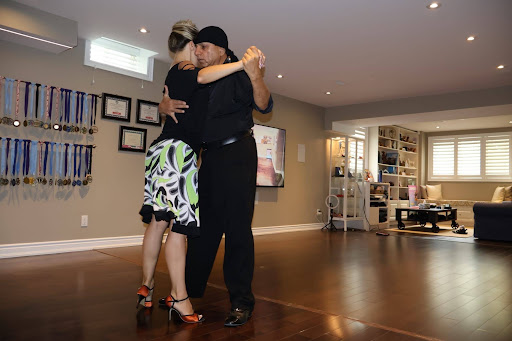
Private lessons are built around one student or couple. The teacher can adjust the pace immediately and spend more time on posture, walking, weight transfer, pivots, embrace, musicality, or a recurring difficulty. Getting the right personalized one-on- one private coaching from a Professionally certified Argentine Tango Teacher builds a solid foundation in an early Tango learning journey.
Tango Canada Academy emphasizes body mechanics, tango essentials, and musicality as important foundations of its teaching approach. When comparing group vs private tango classes, remember that the difference is not simply class size. It is also the amount of customization, partner variety, and independent practice each format creates fast tracking and mastering the learning curve from being a beginner to an advanced dancer depending upon the goals – social, competitive, stage dancing etc.
What Group Learning Feels Like
A group environment combines instruction with shared practice. You learn beside people at a similar level, see that mistakes are normal, and gradually become comfortable moving in a room with other couples. For social tango, this exposure matters because you eventually need to manage your own balance, partner connection, music, and floor awareness at the same time.
What Private Learning Feels Like
A private session is more concentrated and focused in adopting the authentic and correct tango techniques. The instructor can observe a movement repeatedly, explain what is happening, and change the exercise to suit your needs. In the group vs private tango classes decision, this format can be especially appealing to students who are nervous in groups, want to learn with one partner, or need detailed technical feedback and in the early part of the tango learning journey adopting the correct tango technique and body mechanics is extremely rewarding that comes with private lessons.
In the beginner group lesson settings, it is often seen that the understanding of the tango essentials often takes longer to master as most participants are beginners and with diluted / limited attention of the teacher, may not crack the correct body mechanics so importantly required in the early years of Argentine Tango learning journey and making it a joyful experience ahead.
Why Group or Semi Private Classes Can Be A Strong Support.
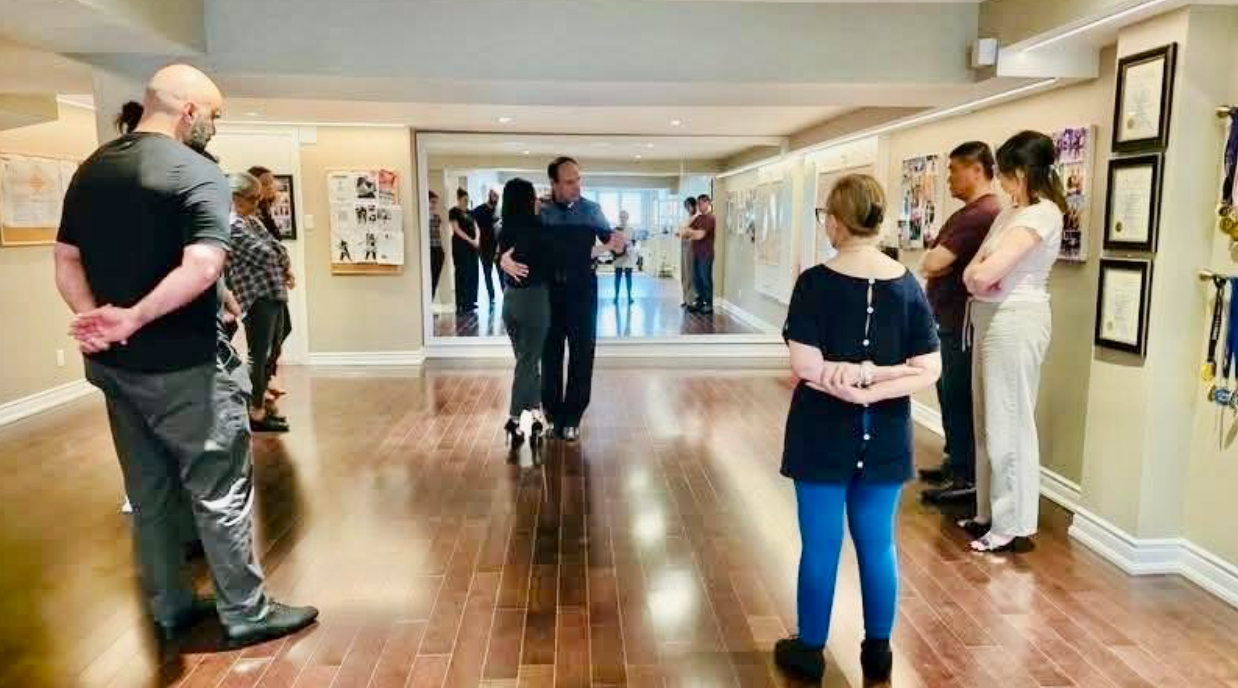
Group classes are often a natural support point because Argentine tango is fundamentally a partner and social dance. Alongside Private / Semi Private Lessons, learning around other beginners helps you become comfortable with shared space and exposes you to different ways people interpret instructions. If rotation is part of the class, you may also discover whether your lead or follow remains understandable with more than one partner. These experiences are an important advantage when evaluating a mix of group and private tango classes for long-term social dancing.
Group instruction can also make consistency easier. A recurring weekly class gives beginners a routine, while the shared format generally makes regular instruction more accessible than one-on-one coaching. Students can develop together, celebrate progress, and gain motivation from seeing familiar classmates return each week. For learners who enjoy community and prefer a structured schedule, group and / or private tango classes may initially favour the group environment.
Group Classes Develop Adaptability
Tango is improvised, so dancers need more than one memorized sequence with one familiar person. A group setting can help you adjust step size, timing, connection, and navigation while maintaining your own balance. That adaptability is difficult to develop if every practice situation is identical.
When Private Lessons May Be The Better Starting Point
Private instruction may be more suitable if you feel highly self-conscious, learn movement slowly, have an irregular schedule, or want to begin with your partner at a personalized pace. The teacher can spend the entire session on what you need rather than following a group curriculum. In a group vs private tango classes comparison, this can make private coaching feel less overwhelming for students who want to understand the basics before entering a busier environment.
Private lessons can also address technical issues efficiently. A teacher may notice that an unstable pivot actually begins with incomplete weight transfer, or that an uncomfortable embrace is connected to posture rather than the arms. Personalized instruction makes it possible to investigate those details immediately. In the early Tango Learning journey, Private Lessons from a Professionally Certified Argentine Instructor are a lot more rewarding to ground in the foundations of Authentic Argentine Tango Technique which at Tango Canada Academy has strong focus and structured training programs preparing students for competitive, social and professional Argentine Tango Events.
For students deciding between group vs private tango classes, private coaching can be especially valuable when one specific problem is preventing progress in several other areas.
Private Lessons Can Build Early Confidence
A few private sessions can familiarize beginners with tango terminology, posture, walking, and partner connection before they enter a group. Private lessons are not required for beginners, but they can create a calmer introduction for students who prefer to understand a new physical skill before practising it publicly.
Comparing Feedback, Pace, Cost, And Scheduling
Feedback is one of the clearest differences in group vs private tango classes. Group teachers divide attention among several dancers, so corrections are usually shorter and focused on the most important issue. That can encourage students to become more independent because they have time to experiment between corrections. Private coaching provides more continuous feedback, which can be useful when a small technical habit needs close observation or when a couple is working on a shared communication problem.
Cost and scheduling also matter. Group classes usually operate at fixed times and spread teaching costs across several participants. Private lessons normally cost more per student but may offer more appointment flexibility, depending on instructor availability. Neither option automatically provides better value. The best value in group vs private tango classes comes from choosing a format you can attend consistently and using the lesson time effectively instead of paying for sessions that do not fit your calendar or learning needs.
Faster Is Not Always Better
Private instruction may identify problems quickly, but tango still requires repetition. Group classes may introduce material at a shared pace, but they also provide social experience that cannot be recreated by technical explanation alone. A sustainable learning pace matters more than trying to collect as many movements as possible in the shortest time.
How To Decide Which Format Fits You First
Begin by identifying why you want to learn. Someone looking for a social hobby may value a group from the start, while a couple preparing for a special event may prefer private coaching. A student with a changing work schedule may prioritize flexible appointments, while another learner may need a fixed weekly class for accountability. Thinking about these practical needs makes the group vs private tango classes decision more useful than simply asking which format is more popular.
You also do not need to make a permanent choice. Many dancers move between formats as their needs change. You might begin privately, join a group after gaining confidence, then use occasional private sessions for technical refinement. Another dancer may begin in a group and add individual coaching when a recurring issue appears. Use the following checklist when comparing group vs private tango classes:
- Choose group instruction if social interaction and community are priorities.
- Consider private coaching if you want detailed individual feedback.
- Choose a group if a fixed weekly schedule helps you stay consistent.
- Consider private lessons when your availability changes frequently.
- Add private coaching when one technical issue repeatedly limits progress.
- Add group learning when you want more partner and floor experience.
- Use guided practice to make corrections feel natural without constant instruction.
- Combine formats when your goals, budget, and schedule support it.
Why Guided Practice Matters With Either Choice
Instruction alone does not create automatic movement. Students need time to repeat walking, pivots, pauses, connection, and musical decisions without receiving a new correction every few seconds. Guided practicas can support both sides of the group vs private tango classes choice by giving dancers a place to apply what they have learned. Tango Canada Academy includes guided practicas alongside its group and private programs.
Practice is particularly useful after a private session because detailed corrections can disappear if they are not repeated. It is equally valuable after a group lesson because the class may move on before every concept feels natural. When judging group vs private tango classes, consider the practice opportunities surrounding the lessons. A strong learning pathway should help you receive instruction, test it independently, ask questions, and gradually use the skill without relying on the teacher for every movement.
Practice Turns Information Into Habits
Knowing that your posture should be organized is different from maintaining it automatically while moving to music with a partner. Repetition gradually reduces the amount of conscious effort required. This is why guided practice can make either learning format more effective over time.
Tango As An Active And Social Learning Experience
Both group and private lessons involve movement, balance, coordination, concentration, and musical attention. The Government of Canada lists dancing as an example of moderate-to-vigorous physical activity and notes that regular physical activity can support energy, balance, coordination, sleep, and overall well-being. For general Canadian guidance, see Physical Activity: Being Physically Active For Your Health. Actual intensity varies, so the group vs private tango classes decision should still focus primarily on your learning needs and circumstances.
Tango also introduces students to a broader artistic and social tradition. Canadian Heritage’s Building Communities through Arts and Heritage program supports local community engagement through arts and heritage activities, although the program itself is not specifically about tango schools. You can learn more through Building Communities Through Arts And Heritage. For dancers comparing group vs private tango classes, this wider community dimension is worth remembering because even students who begin privately can later participate in practicas, workshops, and social tango events.
Enjoyment Can Support Consistency
Tango gives movement a purpose beyond completing an exercise session. Students listen to music, solve movement problems, communicate with a partner, and develop a recognizable skill. Enjoying the learning process can make it easier to maintain regular participation regardless of the format you choose.
Why Choose Tango Canada Academy
Tango Canada Academy makes the group vs private tango classes decision more flexible by offering several ways to learn within one training pathway. Its published programs include beginner through advanced group and private classes, guided practicas, workshops, social dancing development, and competitive coaching. The academy also focuses on posture, balance, axis awareness, walking, tango essentials, musicality, and expression rather than treating tango as a collection of memorized figures.
Students can begin with Argentine Tango Classes for structured group learning, book Private Lessons when they want personalized correction, and use Workshops And Guided Practicas to reinforce skills. Dancers whose goals later become competitive can also explore Tango Competition Training. Because these options can be combined, Tango Canada Academy can support different answers to the group vs private tango classes question as a student’s experience, confidence, schedule, and ambitions develop.
Tango Canada Academy principal Instructor Sudhir Gandhi is a professionally certified Instructor, Adjudicator and Fellow Member with Canadian Dancesport Federation in Authentic Argentine Tango with demonstrated credentials in National and International Tango Competitions.
Make The Choice That Helps You Keep Learning
There is no single format that suits every new dancer. Group classes offer community, partner experience, shared learning, and early exposure to social dance situations. Private lessons offer individualized pacing, focused correction, and a quieter setting in which specific questions can receive more attention. Your best answer to group vs private tango classes depends on which environment will help you attend consistently, stay comfortable enough to learn, and practise with purpose between lessons.
Tango Canada Academy allows students to use both approaches instead of treating the decision as permanent. Begin with Argentine Tango Classes if you want structured social learning, choose Private Lessons when you need focused coaching, and strengthen your progress through Workshops And Guided Practicas. Rather than looking for a universal winner in group vs private tango classes, choose the format that gives you the clearest first step and adjust your training as your tango develops.
Frequently Asked Questions
New students often ask whether a private lesson is necessary before joining a group, which option is better for couples, and whether one format produces faster progress. These are sensible questions, but the answers depend on confidence, goals, learning style, and how much practice you can complete between lessons. The group vs private tango classes choice should therefore be made around your current needs rather than someone else’s learning experience.
Whichever format you select, consistency remains essential. A skilled instructor can help you choose the right level and adjust your plan later when your needs change. It is often more useful to view group vs private tango classes as complementary training tools than as two paths that can never overlap.
Are Group Vs Private Tango Classes Better For Complete Beginners?
Both formats can work well for complete beginners. Group lessons provide community, structure, and exposure to other dancers, while private lessons provide individualized pacing and correction. A social learner may enjoy starting with a group, while someone who feels nervous or needs additional technical support may be more comfortable beginning privately.
Which Is More Affordable In Group Vs Private Tango Classes?
Group instruction is generally more economical per student because teaching time is shared among several participants. Private coaching usually costs more because the instructor works directly with one person or couple. The better value depends on your budget, attendance, goals, and how much individual attention you need.
Can Couples Choose Private Lessons Instead Of Group Classes?
Yes. Couples can use private instruction to work on timing, balance, embrace, musicality, and communication at their own pace. Later, adding group or practica experience can help both partners develop awareness around other dancers and become more comfortable in social environments.
Which Option Helps You Improve Faster In Group Vs Private Tango Classes?
Private lessons can identify individual technical issues quickly, while group classes build adaptability and social confidence. Neither format guarantees faster overall progress. Improvement depends on instruction quality, regular attendance, focused practice, and whether the selected format matches the skills you currently need to develop.
Do I Need A Partner For Group Vs Private Tango Classes?
Not necessarily. Tango Canada Academy offers group and private learning options for different levels, and students should confirm current partner arrangements when registering. If partner rotation or remaining with one partner matters to you, ask about the policy before your first class.
Can I Switch Between Group Vs Private Tango Classes Later?
Yes. Many dancers change or combine formats over time. You may begin privately, join a group after gaining confidence, or use occasional private coaching while attending regular classes and guided practicas. Changing formats can be a practical response to new goals rather than a sign that your first choice was wrong.
What Is A Good Long-Term Approach To Group Vs Private Tango Classes?
For many social dancers, a combination works well. Group classes provide curriculum, partner experience, and community, while private lessons provide targeted correction. Workshops And Guided Practicas can then help turn both types of instruction into more independent, confident dancing.


Comments are closed