





Ask any social dancer what makes a tanda unforgettable and you will hear the same answer again and again: the feeling of a reliable tango embrace connection. When two people breathe together, hear the same pulse, and share balanced contact, even a simple walk becomes profound. At Tango Canada Academy, we teach that the fastest route to confidence is not collecting figures. It is learning how posture, breath, and tone create a readable tango embrace connection that feels safe, musical, and kind for every partner.
This guide turns elusive ideas into practical skills. You will learn how to set your posture so information travels through the torso and not the hands, how to calibrate tone so your tango embrace connection stays responsive, how to adapt distance for open and close embraces, and how to use breath and phrasing to communicate timing without words. Whether you are brand new or deep into your journey, small refinements in tango embrace connection can transform every tanda you dance.
Foundations of a reliable embrace
The purpose of contact
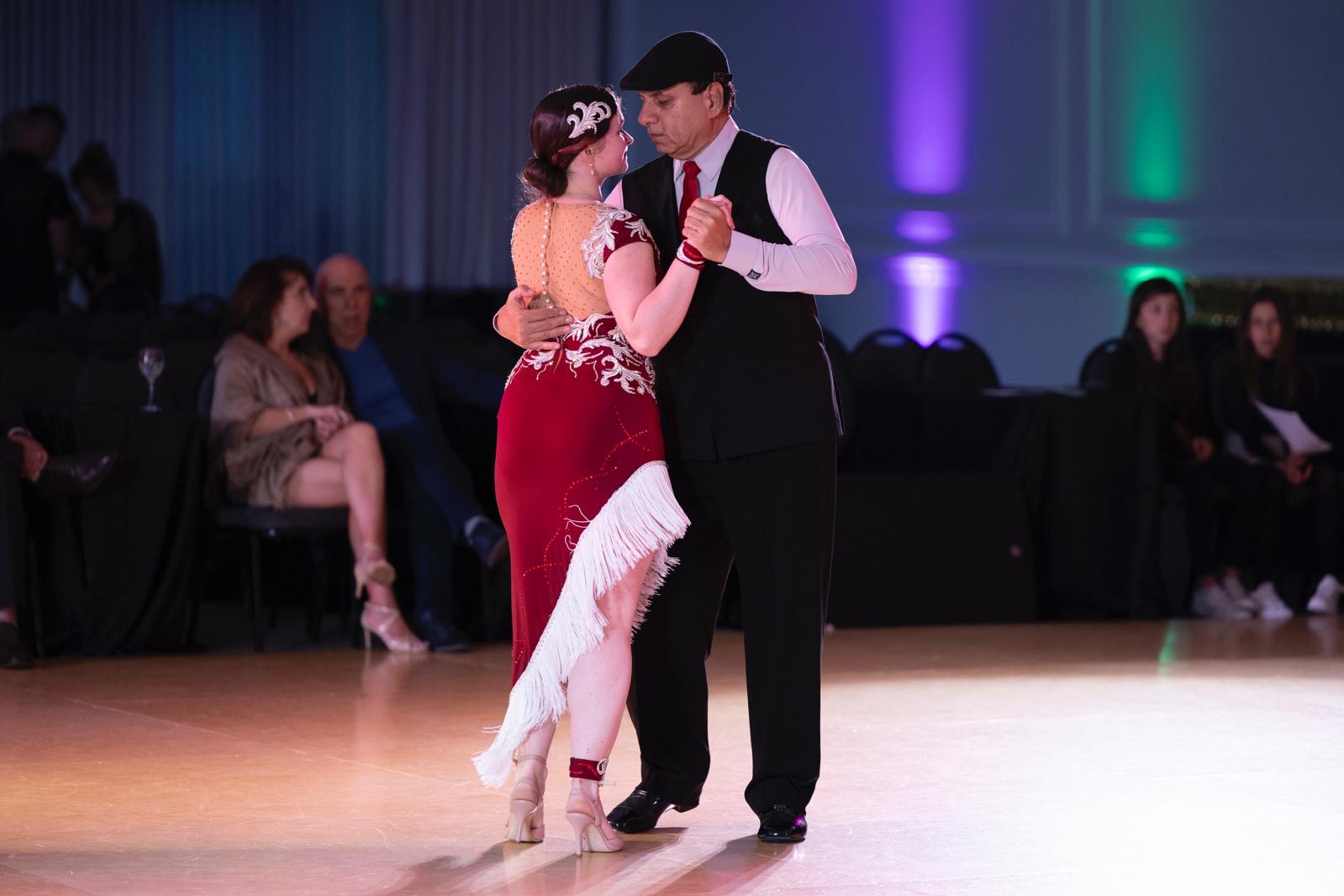
The embrace is not decoration. It is the channel where direction, timing, and quality move between partners. A clear tango embrace connection lets a millimeter of intention propose movement. Too little tone and messages feel fuzzy. Too much tone and everything turns into a shove. Your goal is a living channel that carries information through the center of the body.
Alignment that keeps the channel open
- Stack head, ribs, and pelvis vertically
- Keep knees soft and weight slightly forward over the midfoot
- Let the arms be carried by the back so the tango embrace connection reads through the torso, not the hands
Axis and independence
Two balanced bodies make one conversation. You contribute your own axis and receive information without collapsing into your partner. Guarding axis is not stiffness. It is what allows the tango embrace connection to feel light during pivots, turns, and pauses.
Distance on a spectrum – open to close
Open embrace – visibility and vocabulary
Open embrace gives more room for figures and a clear line of sight to feet and floor. It is great for learning shapes and navigating busy lanes. Keep tone consistent through the torso so the tango embrace connection does not break when the arms extend.
Close embrace – intimacy and micro precision
Close embrace amplifies subtle intention. It is ideal for crowded rooms and lyrical phrasing. The secret is breath. Let micro-expansions and softening guide small accelerations and suspensions. A calm ribcage makes the tango embrace connection readable even when feet hardly move.
When to adjust distance
- Expand slightly for turns that need visibility
- Soften in lyrical passages to invite tiny pauses
- Return to your preferred baseline once the musical moment passes
Every time you adjust distance with care, you protect comfort and preserve a steady tango embrace connection.
Breath, tone, and timing
Breath as a metronome you both feel
Inhale together to suggest not yet. Exhale gently to suggest now. Shared breathing gives you a silent countdown. This is musical without speaking, and it makes the tango embrace connection feel human instead of mechanical.
Tone as the volume knob
Tone is the quiet engagement that carries intention. Imagine a range from 1 to 3. One is very soft, two is medium everyday tone, three is firm enough for dynamic moments. Slide within this range rather than switching on or off. Smooth tone changes keep your tango embrace connection responsive and never startling.
Walking that speaks
Caminata – project, transfer, collect
The walk is where tango is born. Project from the standing leg, transfer weight fully, and collect with attention. These three micro actions are the simplest way to improve tango embrace connection because your partner feels every transfer through the torso.
A 2 minute drill
Put on a calm Di Sarli track. Step one beat at a time. Whisper to yourself project, transfer, collect. Notice how a gentle ribcage carries timing through the tango embrace connection without any hand movement at all.
Pivots, ochos, and turns without stress
The pivot rule
Rotate the torso first. Let hips and feet follow. Keep the spine vertical so the knee does not twist. Small pivots with full collections are safer, clearer, and kinder on crowded floors. When pivots stay small and centered, your tango embrace connection remains steady even during rotation.
Ochos and molinetes
Back ochos teach balance and timing. Forward ochos add clarity to direction changes. A compact molinete is a circle of forward, side, back, side around a stable center. Between each segment, collect completely. Collections act like commas that the tango embrace connection can read.
Musicality you can feel
Pulse, phrase, and pause
- Pulse is the heartbeat. Walk it.
- Phrase is the sentence. Change or pause at the commas.
- Pause is stillness that stays alive. Do not collapse. Breathe and listen.
Anchoring simple steps to these layers makes your tango embrace connection feel musical without any extra figures.
Four orchestras, four qualities
- Di Sarli invites longer lines and gentle suspensions
- D’Arienzo rewards crisp rebounds and compact accents
- Pugliese offers elastic tension and release for dramatic stillness
- Troilo encourages warmth and lyricism with soft adornos
Matching your step size and tone to the orchestra deepens tango embrace connection because both partners can predict the quality of movement from what they hear.
Floor craft is connection with the whole room
Social navigation
Milongas move counterclockwise. Keep to your lane. Size steps to traffic. Do not overtake unless there is safe space. Courtesy keeps everyone calm and directly improves tango embrace connection because partners stop bracing for surprises.
First tanda plan
Begin on an inner lane. Choose a calm orchestra. Walk and pause for the first song. Let the embrace settle before rotations. When the room feels safe, your tango embrace connection will immediately feel better.
Troubleshooting – common issues and quick fixes
Heavy feeling in the arms
Check your own axis first. If you are leaning, your partner is rescuing you. Re-center and let the back carry the arms. The tango embrace connection will lighten right away.
Wobbly pivots
Shrink step size by half and slow the initiation. Keep the spine vertical like a lighthouse. With smaller pivots, your tango embrace connection stays anchored and clear.
Rushed timing
Plan a single pause per song at a phrase boundary. Breathing together during that pause recalibrates the nervous system. After two tandas like this, the tango embrace connection feels unhurried and musical.
Five micro drills that change everything
- Posture stack – 60 seconds
Align head, ribs, pelvis. Soft knees. Feel weight gently forward. - Pulse walk – 90 seconds
One step every two beats. Listen for silent feet. - Tone ladder – 60 seconds
Embrace at tone 1, then 2, then 3, then back to 1. Never grip. - Quarter pivots – 60 seconds
Slow torso-led pivots both directions. Collect between each. - Planned pause – 30 seconds
Breathe in together, wait one count, exhale into the next step.
Repeat twice. In five minutes per day your tango embrace connection becomes noticeably calmer.
15 myths about connection and better truths
- Myth: Strong connection means strong squeeze
Truth: A light torso-led channel carries more information - Myth: Close embrace is only for advanced dancers
Truth: With axis and breath, close can feel easier and safer - Myth: Followers must anticipate to stay musical
Truth: Waiting for a clear proposal keeps timing honest - Myth: Bigger steps look more confident
Truth: Small steps show control and protect lanes - Myth: Arms teach connection
Truth: The back transmits, hands simply place - Myth: Musicality lives in fancy figures
Truth: It lives in walk, pause, and phrasing first - Myth: You need perfect partners
Truth: Become the partner who makes connection easy - Myth: Dramatic shapes make chemistry
Truth: Listening does, shapes can decorate - Myth: Floor craft is separate from art
Truth: Safety is a core part of artistry - Myth: A rigid frame is elegant
Truth: A breathing embrace is readable and kind - Myth: Close means heavy
Truth: Close can be the lightest when axis is honest - Myth: Leading is pushing
Truth: Leading is proposing from the center - Myth: Following is passive
Truth: Following co-authors timing and energy - Myth: You must always move
Truth: Stillness can be the most musical choice - Myth: Connection is mysterious
Truth: Connection is posture, breath, tone, and practice
Each truth points back to one idea – refine the channel and the tango embrace connection improves for every partner you meet.
Building confidence through connection
Presence over performance
Many new dancers worry about not knowing enough figures. In reality, good partners remember kindness and clarity. If you show up with a readable tango embrace connection, safe navigation, and calm timing, people will ask you to dance again.
The social dividend
Connection reduces anxiety. Anxiety reduces tension. Tension reduction improves balance. Balance makes pivots easy. Easy pivots make the tango embrace connection feel like music. This is the feedback loop you want.
Why Choose Tango Canada Academy
Tango Canada Academy is built on one promise – teach what actually changes your dancing on a social floor. We focus on posture, breath, axis, and musical listening so your tango embrace connection becomes dependable in real conditions. Our classes link every new figure back to fundamentals. We host practicas where you can experiment safely, music labs where you can feel phrasing, and feedback sessions where small improvements add up.
What you can expect
- Progressive curriculum that ties technique to readable connection
- Instructors with international teaching and performance experience who turn nuances into simple cues
- Weekly practicas and etiquette coaching for stress free socials
- Optional video feedback and short home drills to reinforce skills
- A supportive community that values clarity, kindness, and safe navigation
When you train where connection is central, your tango embrace connection strengthens quickly, and the dance becomes joyful.
Canadian resources that support your journey
Canada offers national programs that help communities learn and share the arts. These are useful when you want to deepen your practice, attend festivals, or support community projects that enrich the tango scene.
- Canada Council for the Arts – Dance: programs and grants that support dance participation and training
- Canadian Heritage – Arts and Cultural Participation: national initiatives that foster cultural learning and engagement
Use these sites to find workshops, residencies, and projects that indirectly strengthen your tango embrace connection through music education and community arts.
A four week plan to upgrade connection
Week 1 – Organize the channel
- Daily posture stack and pulse walk
- In class: open embrace mechanics and quiet hands
- Practica: two tandas of walking and planned pauses
- Goal: a calmer tango embrace connection while walking
Week 2 – Breath and tone
- Add the tone ladder to home practice
- In class: side steps and phrasing changes at musical commas
- Practica: compact steps on inner lanes
- Goal: breath driven timing that partners can feel
Week 3 – Rotation with steadiness
- Quarter pivots and tiny back ochos at home
- In class: half molinete with full collections
- Practica: prioritize balance over size
- Goal: the tango embrace connection stays steady during rotation
Week 4 – Close embrace and navigation
- Short close embrace tandas with friendly partners
- In class: lane discipline and emergency exits
- Milonga visit: two calm tandas, one with planned pauses
- Goal: trustworthy tango embrace connection in real conditions
Connection is a set of choices you can practice
Great tandas are not accidents. They are the result of a clear channel, a breathing embrace, and a musical mind. If you commit to posture, breath, tone, and small consistent drills, your tango embrace connection will grow week by week. At Tango Canada Academy we are ready to guide your next step. Join a trial class, come to a practica, and experience how a kinder embrace changes everything.
Your best dance is closer than you think. Start with one breath, one pulse, one clear step.
Frequently Asked Questions
1) How can I make my tango embrace connection feel comfortable to new partners?
Focus on vertical alignment, soft knees, and breath. Carry the arms with the back and keep tone at a gentle medium. These habits make the tango embrace connection clear without force.
2) Should beginners try close embrace or stay open to build tango embrace connection?
Use both in small doses. Start open to see shapes and protect balance. Add short moments of close embrace so your tango embrace connection becomes responsive early.
3) How do leaders avoid using hands to communicate tango embrace connection?
Move from the center first. Keep elbows quiet and let the torso propose direction and timing. Hands simply place, the torso carries the message.
4) What can followers do to contribute to tango embrace connection without anticipating?
Listen through the back, protect your axis, and finish each transfer before the next action. Tiny timing colors and adornos are welcome when they do not pull the embrace off center.
5) How can I practice tango embrace connection at home without a partner?
Do posture stacks, pulse walking, the tone ladder, and quarter pivots. Add planned pauses while you breathe intentionally. These drills wire the body so the embrace feels natural later.
6) Why do my pivots break the tango embrace connection during turns?
Your step size is likely too large or the torso is rotating after the feet. Shrink steps, initiate rotation from the torso, and collect fully between segments.
7) How does floor craft influence tango embrace connection at a milonga?
Good navigation lowers stress for both partners. Keep lanes, avoid overtaking, and size steps to traffic. A safer room makes every tango embrace connection calmer and more musical.


Comments are closed