



Tango is one of the most recognizable partner dances in the world, yet the word “tango” can describe two experiences that look, feel, and function very differently. One version is often seen in ballroom competitions, where couples create sharp shapes and polished routines. The other is experienced in social tango communities, where dancers improvise to the music and communicate through a responsive embrace. Understanding Argentine tango vs ballroom tango helps beginners choose the right class, avoid confusing technical habits, and set realistic expectations.
At Tango Canada Academy, we often meet students who have watched both styles and are not sure which one they want to learn. Some are attracted to the dramatic appearance of ballroom tango, while others want the musical connection and social culture of Argentine tango or aspire to also do show cases or Stage Dancing in Argentine Tango. This guide offers a clear Argentine tango vs ballroom tango comparison covering history, posture, embrace, movement, musicality, training, social etiquette, and performance goals.
Their Shared History Led To Two Different Traditions
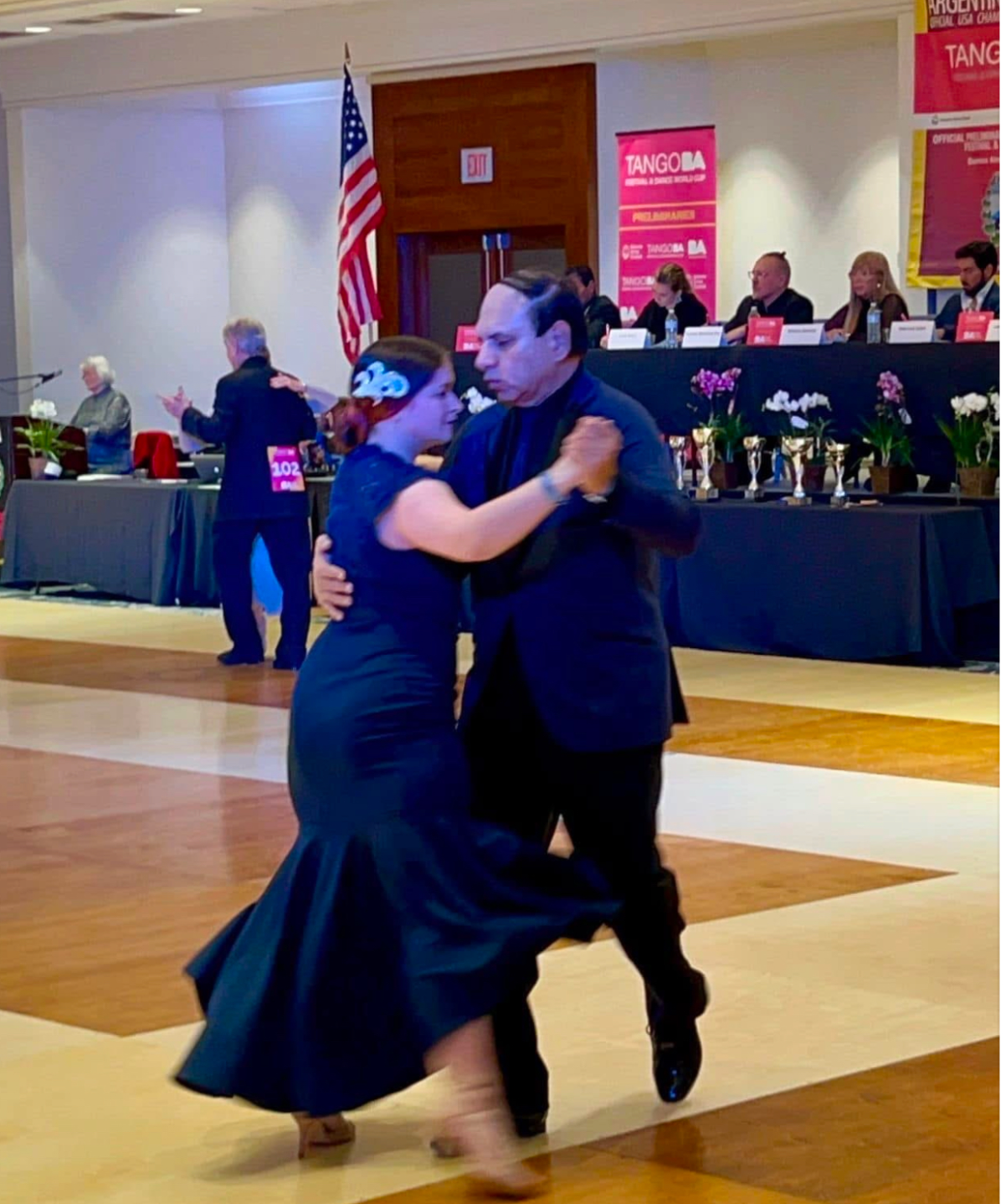
Argentine tango developed within the cultural environment of Buenos Aires and Montevideo. UNESCO describes tango as an Argentinian and Uruguayan tradition that developed among urban communities in those cities, where music, dance, and poetry became part of a shared cultural expression. That social origin remains important when comparing Argentine tango vs ballroom tango because Argentine tango continues to prioritize improvisation, partner communication, and adaptation to the room.Over the years Argentine Tango has also evolved to find its place in Dancesport Competitions, Tango centric Competitions and Stage Tango / Tango Fiesta incorporating Argentine Tango moves with breathtaking tricks and accentuated partnerwork making it captivating delight for the audiences.
Ballroom tango grew from tango’s international spread and its later adaptation into formal ballroom teaching and competition systems. The Imperial Society of Teachers of Dancing notes that tango was introduced from Argentina and later given a firm technical structure alongside other ballroom dances. This helps explain why Argentine tango vs ballroom tango is not simply a comparison between old and new versions. It is a comparison between two traditions that developed different training methods and performance priorities.
The Biggest Difference Is The Purpose Of The Dance
Argentine tango is primarily an improvised social dance. Dancers build movement from walking, weight changes, pivots, turns, pauses, and rhythmic choices, then adapt those elements to the music, their partner, and the available space. In an Argentine tango vs ballroom tango comparison, this means the Argentine dancer trains for flexibility. The goal is not to reproduce one sequence exactly, but to create a comfortable and musical dance in real time.
Ballroom tango can be danced socially, on stage, or in competition, but its formal systems place much greater emphasis on standardized figures, consistent technique, and visual presentation. The ISTD describes ballroom tango as part of Modern Ballroom, which is taught through organized technical systems and can be performed in competitions, social gatherings, or stage settings. In Argentine tango vs ballroom tango, ballroom training therefore tends to provide a more defined syllabus and a clearer route toward judged performance vs Argentine Tango Syllabus focussing on real time improvisations and partner connection grounded in strong Bio Mechanics and Tango Technique.
The Embrace And Partner Connection Feel Different
In Argentine tango, the embrace functions as a flexible communication system. Couples may dance in a close or more open position depending on comfort, music, space, and the movement being used. The connection often changes subtly during a song, while information is transmitted through the torso, posture, and weight intention. This is one of the most important Argentine tango vs ballroom tango distinctions because the embrace supports improvisation rather than serving only as a fixed visual frame.
International Standard ballroom dances are generally performed in a closed position, and the World DanceSport Federation states that the hold used at the beginning is maintained throughout the dance. American Smooth allows more open work, so not every ballroom tango follows exactly the same hold rules. Still, ballroom technique usually emphasizes a clearly shaped frame and presentation that can be seen from a distance. A careful Argentine tango vs ballroom tango comparison should recognize both International and American systems instead of treating ballroom tango as one completely uniform style.
Posture And Body Alignment Serve Different Goals
Argentine tango posture is designed to support comfortable walking, balance, pivots, and sustained social dancing. Partners generally maintain their own axis while creating a forward intention toward the connection. The body should feel organized but not rigid, allowing the couple to pause, redirect, or change the embrace without losing comfort. In Argentine tango vs ballroom tango, the Argentine posture is usually judged by how well it supports communication and movement rather than whether every couple produces the same silhouette.
Ballroom tango posture is more standardized and visually projected. The frame, head position, torso tone, and partnership shape are trained to remain clear across a large floor. This does not mean ballroom posture is artificial or Argentine posture is casual. Both demand control, flexibility and intentionality based on music and floorcrafting. The difference in Argentine tango vs ballroom tango is that one prioritizes social adaptability and the other prioritizes repeatable technical and visual form.
Movement Vocabulary And Floor Use Are Not The Same
Argentine tango movement grows from a compact vocabulary of walking, crosses, ochos, pivots, turns, rebounds, and pauses that can be recombined in many ways and performed even in compact spaces.. Social dancers must also adjust step size to a crowded floor and travel with the general line of dance. In Argentine tango vs ballroom tango, complexity often comes from timing and combination rather than from displaying a large movement at every moment.
Ballroom tango uses codified figures, recognized timings, and directional patterns within a formal syllabus. Official ballroom syllabi list defined tango figures and technical requirements, reinforcing a system in which students progress through organized material. Ballroom movement is often sharper and more outwardly projected, while Argentine movement may range from rhythmic and playful to smooth and restrained. This makes Argentine tango vs ballroom tango a contrast in movement design, not a simple contrast between subtle and dramatic.
Musicality Creates A Different Emotional Experience
Argentine tango musicality is strongly interpretive. Social dancers decide when to step, pause, accelerate, or follow a melodic line based on what they hear and what the partnership can comfortably express. Different orchestras and periods invite different movement qualities, and the same song may produce a different dance each time. In Argentine tango vs ballroom tango, this makes musical listening part of the decision-making process rather than only a timing requirement.
Ballroom tango also requires musical accuracy and expression, but routines and syllabus figures often organize movement around established counts and planned accents. Dancers can refine how strongly they express those accents and how choreography matches the music, yet the overall structure is usually more repeatable. The Argentine tango vs ballroom tango distinction is therefore not that one style is musical and the other is not. Both are musical, but one emphasizes spontaneous interpretation while the other often emphasizes precise delivery.
Social Culture And Training Environments Shape The Experience
Argentine tango communities commonly organize social nights called milongas, where dancers navigate a shared floor, follow local invitation customs, and often dance sets of songs with one partner. Students therefore train not only steps but also floorcraft, partner comfort, and social awareness. For someone choosing Argentine tango vs ballroom tango, this community-based purpose may be the deciding factor if the main goal is improvised social dancing.Though Argentine tango also offers opportunities in Stage Dancing, Showcases and Dancesport Competitions, medal systems and tests, a fast growing trend seen in recent years.
Ballroom students may also attend social dances, but many programs are built around studio lessons, medal systems, showcases, and competitions. The formal DanceSport world distinguishes International Ballroom and American Smooth systems, each with defined events and technical expectations. In Argentine tango vs ballroom tango, ballroom culture often offers measurable levels and performance milestones, while Argentine tango culture often offers ongoing participation in social events.
A Quick Comparison For Beginners
No short checklist can capture every school, dancer, or regional tradition, but a practical summary can make Argentine tango vs ballroom tango easier to remember. Argentine tango is generally built for improvisational social dancing, while ballroom tango is more strongly shaped by standardized teaching and performance systems. Argentine connection tends to be flexible, while ballroom framing is usually more formally maintained.
Use the points below as a decision tool rather than a ranking. Both styles require balance, musicality, partner awareness, patience, and consistent practice. The best Argentine tango vs ballroom tango option is the one that matches the experience you want to have, the community you hope to join, and the goals that will keep you motivated over time.
- Argentine tango emphasizes improvisation, while ballroom tango often uses syllabus figures and planned routines.
- Argentine tango adapts closely to social floor space ( and even Stage Tango and Competition formats in recent years) , while ballroom tango often uses larger projected movement.
- Argentine tango uses a flexible embrace, while ballroom tango generally uses a more structured frame.
- Argentine tango musicality centres on live interpretation, while ballroom musicality often centres on precise timing and accents.
- Argentine tango culture revolves around milongas and practicas, while ballroom culture often includes studios, medal levels, showcases, and competitions.
- Argentine tango appearance varies greatly between couples, while ballroom tango aims for more standardized visual qualities.
- Argentine tango training develops adaptable social communication, while ballroom training develops repeatable technical presentation.
How To Choose The Right Tango Learning Path
Begin by identifying where you want to dance. If your main goal is a social community where each dance is created at the moment, Argentine tango is likely the stronger fit. Some dancers study both, but they learn faster when they keep the techniques distinct and understand the purpose behind each Argentine tango vs ballroom tango habit.
Tango Canada Academy focuses on Argentine tango and offers several ways to build a complete learning path. Argentine Tango Classes provide structured foundations, Private, Semi Private Lessons deliver individual correction, Workshops And Guided Practicas help students convert ideas into comfortable social dancing, and Tango Competition Training supports dancers who want advanced refinement and competitive coaching and Coaching for Professional Argentine Tango Professional Instructors accreditations.These options allow students to explore the Argentine side of Argentine tango vs ballroom tango through instruction matched to their goals.
Canadian Resources Related To Movement And Cultural Participation
Dance can contribute to an active lifestyle through walking, balance, coordination, and sustained movement. The Government of Canada explains that physical activity can support energy, strength, sleep, stress reduction, and the ability to complete daily tasks. Readers interested in the wellness side of Argentine tango vs ballroom tango can review Physical Activity And Your Health for general Canadian guidance.
Tango is also part of a wider world of cultural participation and community arts. Canadian Heritage states that its programs support cultural expression and strong communities, while the Building Communities through Arts and Heritage program increases opportunities for local artists and cultural contributors to participate in community events. For the cultural side of Argentine tango vs ballroom tango, explore Building Communities Through Arts And Heritage.
Why Choose Tango Canada Academy
Tango Canada Academy teaches Argentine tango as a connected, musical, and practical social dance. Our approach gives beginners a clear foundation in posture, walking, balance, embrace, musicality, and floor awareness before adding greater complexity. This matters in Argentine tango vs ballroom tango because students need instruction that reflects the actual purpose of the style rather than importing habits from another system.
Our services support different learning goals. Argentine Tango Classes offer consistent progression, Private Lessons provide personal feedback, Workshops And Guided Practicas build confidence through repetition, and Tango Competition Training supports advanced development. Tango Canada Academy’s official program overview lists beginner to advanced classes, private instruction, guided practicas, workshops, students medal tests, coaching for Professional Argentine Tango Instructors accreditations and competitive coaching for dancers in Toronto and the GTA.
Choose The Tango Style That Matches Your Goals
Argentine tango and ballroom tango share historical roots, partnership, music, and dramatic character, but they developed into distinct dance traditions. Argentine tango prioritizes improvisation, flexible connection, musical interpretation, and social navigation. Ballroom tango prioritizes standardized technique, structured figures, visual presentation, and repeatable performance. The real Argentine tango vs ballroom tango difference lies in what each dance is designed to help partners accomplish.
If social connection and improvisational musicality attract you, Tango Canada Academy can help you begin with strong Argentine tango foundations. Join Argentine Tango Classes for structured learning, attend Workshops And Guided Practicas to gain real floor confidence, or book Private Lessons for personalized development. Contact Tango Canada Academy to choose a starting point that fits your schedule, experience, and goals.
Frequently Asked Questions
Beginners often notice the visual differences between the two styles before understanding the technical reasons behind them. The following answers summarize the most common Argentine tango vs ballroom tango questions about learning, partners, music, social dancing, class expectations, and the type of progress each tradition encourages.
Neither style should be judged only by a performance video. Classes, social environments, teaching methods, and instructors can create very different experiences. Use these answers as a foundation, then attend a suitable beginner class and try the style that most closely matches your personality, schedule, and personal goals.
1. What Is The Main Argentine Tango Vs Ballroom Tango Difference?
The main difference is purpose. Argentine tango is built around improvised social dancing and adaptable connection, while ballroom tango is more strongly organized around standardized figures, formal technique, and presentation. That purpose influences posture, embrace, musical interpretation, class structure, and the type of environment in which each style is commonly danced.
2. Which Is Better For Social Dancing In Argentine Tango Vs Ballroom Tango?
Argentine tango is usually the more direct choice for tango-specific social events because its technique includes improvisation, floorcraft, and adaptation to different partners. Argentine Tango also offers opportunities in Stage Dancing and Competitions.
Ballroom tango can also be danced socially, but its formal systems often place greater emphasis on figures and presentation.
3. Which Is Easier For Beginners In Argentine Tango Vs Ballroom Tango?
Neither is universally easier. Argentine tango may suit students who enjoy connection and improvisation, while ballroom tango may suit those who prefer a syllabus, repeatable figures, and defined levels. The easier option is usually the one whose learning process feels enjoyable enough for you to practise consistently.
4. Do I Need A Partner For Argentine Tango Vs Ballroom Tango Classes?
Requirements depend on the school. Many group programs in both traditions welcome individuals and rotate partners, while private instruction can be taken by one person or a couple. Contact the school before registering so you understand its rotation policy, class balance, and expectations for solo students.
5. Is The Music Different In Argentine Tango Vs Ballroom Tango?
Yes. Argentine tango classes and milongas commonly use traditional tango orchestras with varied phrasing and rhythmic character. Ballroom tango music is usually selected or arranged to support consistent competition timing and accents. These musical settings influence how dancers pause, phrase movement, and prepare their most dramatic actions.
6. Can I Learn Both Argentine Tango Vs Ballroom Tango At The Same Time?
Yes, but keep the techniques distinct. Posture, frame, embrace, musical decisions, and movement dynamics differ, so learning from qualified teachers in each style helps prevent confusion. Tell both instructors that you are cross-training so they can explain which habits transfer well and which ones need adjustment.
7. Where Can I Learn The Argentine Side Of Argentine Tango Vs Ballroom Tango In Toronto?
Tango Canada Academy offers Argentine Tango Classes, Private Lessons, Workshops And Guided Practicas, and Tango Competition Training for students who want structured instruction in Toronto and the GTA. Beginners can start with foundational classes, then add guided practice or personal coaching as their confidence and goals develop.


Comments are closed