



Choosing how to learn tango can feel almost as important as choosing to begin. Some students enjoy the energy and variety of learning with a group, while others prefer focused instruction built entirely around their needs. Both formats can help you become a confident dancer, but they develop skills in different ways. A useful group vs private tango lessons comparison should consider your goals, experience, budget, schedule, personality, and preferred pace of learning.
At Tango Canada Academy, students can build their training through Argentine Tango Classes, Private Lessons, Workshops And Guided Practicas, and Tango Competition Training. Rather than presenting one format as universally better, we help dancers select the combination that supports their current stage. This guide explains group vs private tango lessons in practical terms so you can understand the advantages, limitations, costs, and ideal uses of each option before choosing your learning path.
Understanding The Main Difference Between The Two Formats
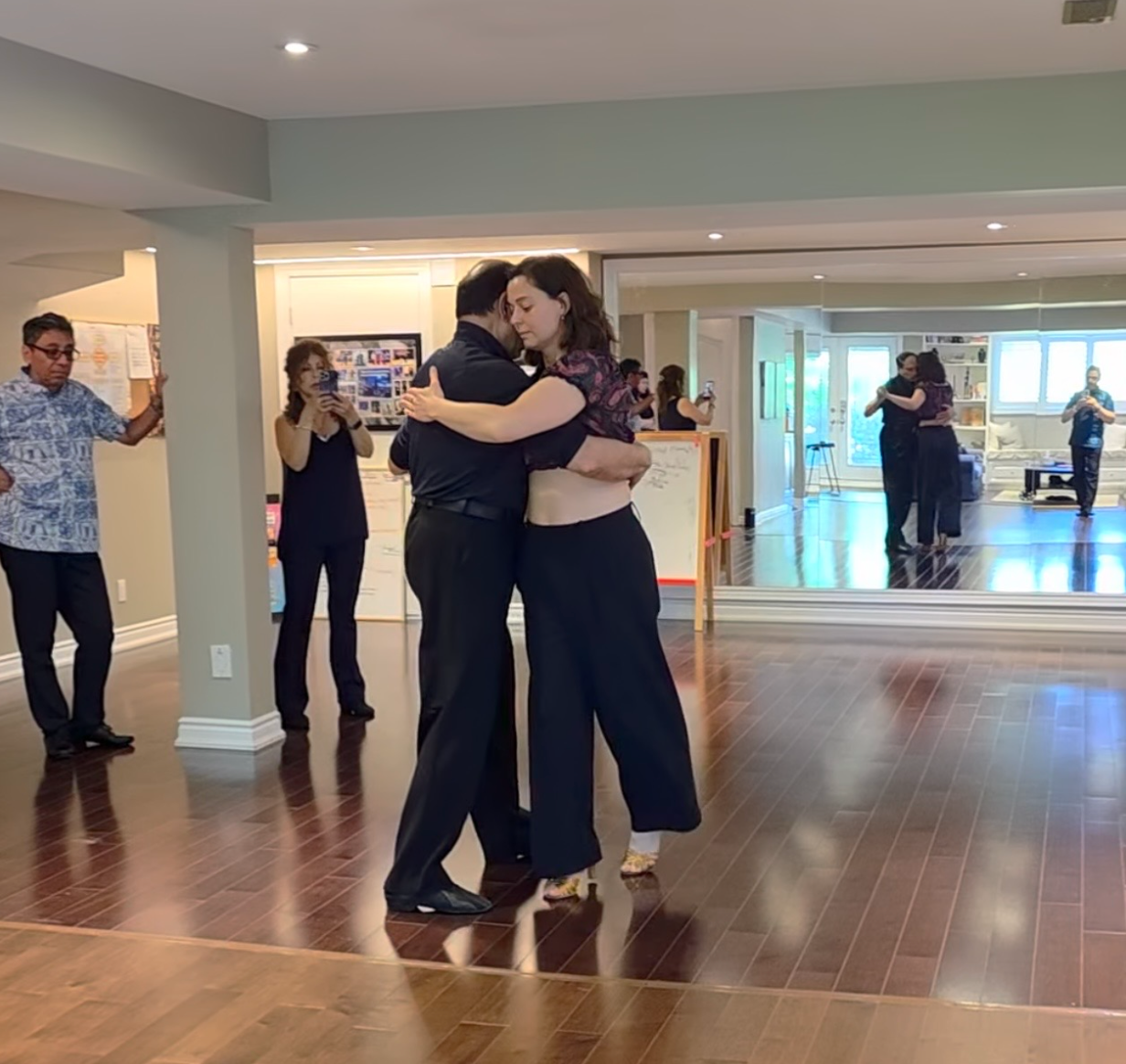
The central difference in group vs private tango lessons is how the instructor’s attention is divided. In a group class, one or more instructors teach several students at the same time. Everyone usually works on a shared topic, such as walking, posture, musical timing, ochos, turns, or social floorcraft. Students may practise with a partner they brought or rotate partners, depending on the class structure. The lesson moves at a pace that supports the group as a whole rather than one individual.
A private or semi private lesson is designed around one student or one or two couples. The instructor can observe every repetition, identify personal habits, and adjust the tango technique, body mechanics which is so important in a good foundational learning of this beautiful dance style and support the students in their learning journey goals. When evaluating group vs private tango lessons, remember that the difference is not simply the number of people in the room. It is the balance between community-based learning and personalized correction. Both can deliver strong results when taught well and used at the appropriate stage, the quality and credentials of the Instructor also play a very big impact.
What Group Lessons Usually Include
Group lessons usually include an instructor demonstration, an explanation of the technique, supervised partner practice, and general corrections that apply to the class. At Tango Canada Academy, Argentine Tango Classes are part of a broader selection of beginner through advanced training options grounded in strong tango technique and body mechanics and learning applied to social, competitive, stage dancing including professional teachers certification training.
What Private Lessons Usually Include
Private instruction normally begins with a personal objective or an assessment of the student’s current movement. The teacher can then focus on specific areas such as balance, axis, embrace, musical interpretation, leading, following, social navigation, or preparation for a performance or even professional teachers training.
The Main Advantages Of Group Tango Lessons
One of the greatest advantages in the group vs private tango lessons decision is the social learning available in a class. Argentine tango is an improvised partner dance, so students must eventually become comfortable responding to different people. A group setting gives dancers opportunities to observe others, practise adaptability, and recognize that everyone experiences similar beginner challenges. The atmosphere can make lessons feel less intense and more enjoyable, especially for students who are motivated by community.
Group classes also create a shared progression. Students learn the same foundations, practise together, and often encourage one another as their confidence grows. When comparing group vs private tango lessons, group instruction is frequently the more affordable way to receive regular teaching. It can therefore be easier to maintain every week, which matters because steady attendance and repetition are essential for turning information into physical skill.
Learning From Different Partners
Partner rotation can reveal whether your lead or follow is genuinely clear. A movement that works only with one familiar partner may depend on anticipation rather than communication. Practicing with different dancers helps you develop technique that works more consistently in social settings.
Building A Tango Community
A group class can become your first connection to the wider tango community. Familiar faces make guided practicas and social events feel less intimidating, and that sense of belonging can strengthen your motivation to continue learning.
The Possible Limitations Of Group Lessons
The clearest limitation in group vs private tango lessons is that individual attention must be shared. An instructor may notice an issue with your posture or timing, but there may not be enough time to examine it deeply during class. You might receive a useful general correction, yet still need help understanding how to apply it to your body. Students with persistent technical problems may therefore feel that progress slows if they rely only on group instruction.
Group classes also follow a planned topic and pace. If you already understand the material, you may want more challenges. If you need additional time, the class must still move forward. This does not make group instruction ineffective. It simply means that a group vs private tango lessons plan should account for how closely the curriculum matches your current needs. The strongest group programs offer clear level placement, opportunities to ask questions, and practice options outside regular lessons.
When A Group Feels Too Fast Or Too Slow
A class may feel too fast when you are still thinking about balance while new patterns are being introduced. It may feel too slow when you have already mastered the topic. Speaking with the instructor can help determine whether you need a different level, a practice session, or a private lesson.
The Main Advantages Of Private Tango Lessons
Personalization is the strongest argument for private instruction in a group vs private tango lessons comparison. Every explanation, exercise, and correction can be selected according to what you need. If your embrace feels tense, the teacher can work on that issue immediately. If pivots feel unstable, the lesson can examine alignment, weight placement, footwear, and rotation mechanics. This concentration can produce breakthroughs because the teacher does not need to divide attention among multiple couples.
Private coaching also supports specific goals. You may be preparing for your first milonga, returning after a long break, learning with a spouse, refining musicality, or preparing for a competition. In each case, the group vs private tango lessons choice becomes easier because private instruction can follow a customized plan. Tango Canada Academy lists private coaching among its learning options alongside classes, guided practicas, workshops, and competitive coaching.
Faster Identification Of Personal Habits
A private teacher can watch how you initiate movement, place your feet, maintain your axis, and respond to your partner. Small habits that are difficult to notice in a busy group can be isolated and corrected through focused exercises.
Flexible Topics And Pacing
Private lessons can spend an entire session on one essential skill or move quickly through material you already understand. This flexibility is particularly useful when your learning needs do not match a standard class sequence.
The Possible Limitations Of Private Lessons
Cost is usually the first concern when comparing group vs private tango lessons. Private coaching requires exclusive instructor time and therefore tends to cost more per session. For students with limited budgets, relying entirely on private instruction may reduce how often they can train. One highly focused lesson can be valuable, but progress still requires repetition between sessions. Paying for personal coaching without practising the corrections may limit the return on your investment.
Private instruction can also provide less exposure to varied partners and group dynamics. You may become comfortable with the instructor but still feel uncertain at a crowded practica or milonga. This is why group vs private tango lessons should not always be treated as an either-or decision. Private coaching can improve precision, while group classes and practicas build adaptability, floor awareness, and social confidence.
Private lessons with Professionally Certified Instructors of course offer much higher value and faster learning curve and sometimes the limitations in cost or budgets could be offset by choosing a combination of Private, Semi Private and Group Lessons.
At Tango Canada Academy, considering these budget limitations there are different learning options available. A “Starter Package” for absolute beginner at only $90 for 3 Private lessons of 90 minutes each is offered by a Professionally Certified Instructor,
Why More Attention Does Not Remove The Need To Practise
Personal correction helps you understand what to change, but your body still needs repetition before the new movement feels natural. A private lesson works best in your early days of tango learning journey,when you review its main exercises between appointments and apply them during classes or guided practicas.
Which Format Is Better For Complete Beginners?
For many complete beginners, group classes provide a comfortable and affordable introduction.However Private or Semi Private lessons by Professionally Certified Instructors are best in the early days to build a strong foundation grounded in correct tango technique, body mechanics vital for Authentic Argentine Tango learning journey.
In the group vs private tango lessons debate, group instruction can be an excellent first step when the program is genuinely designed for beginners and builds posture, walking, balance, timing, and connection in a logical order.
Private instruction can still be valuable at the beginning, especially for students who feel anxious in groups, have limited availability, or want to learn with one dedicated partner. A single private assessment can also help identify balance or posture issues before they become habits. The best group vs private tango lessons choice for a beginner may therefore be a structured group course supported by occasional private or semi private sessions rather than relying exclusively on one format.
A Strong Beginner Combination
A practical beginner plan is one weekly Argentine Tango Classes session, regular Workshops And Guided Practicas, and a Private Lessons appointment when a specific issue needs focused attention. This combination offers structure, repetition, adaptability, and personal feedback.
Which Format Helps Intermediate Dancers Most?
Intermediate dancers often reach a stage where they know many tango ideas but cannot always perform them comfortably. They may understand an ocho, giro, or change of direction intellectually while struggling with balance, timing, or partner communication. At this stage, group vs private tango lessons serve different purposes. Group classes expand vocabulary and provide partner variety, while private instruction identifies why existing movements are not working consistently.
A strong intermediate plan uses private coaching to improve quality and group training to test that quality with different dancers. Workshops can deepen musicality or explore specific movement families, while practicas provide the repetition required to integrate them. In this stage of group vs private tango lessons, the formats become complementary. One develops precision, while the other develops versatility and comfort under changing social conditions.
Signs You May Need Private Feedback
Consider personal coaching if the same correction appears repeatedly, one side feels significantly weaker, partners struggle to understand your intention, or your movement works in class but disappears during social dancing. These signs often point to a personal technical issue rather than a lack of additional figures.
Which Option Is Better For Couples?
Couples sometimes assume that private instruction is automatically the best choice because they want to learn together. It can certainly be effective, especially when both partners share a goal and prefer personalized pacing. A private teacher can examine how the couple communicates, correct each role separately, and help them build a comfortable embrace. In a group vs private tango lessons comparison, private coaching can provide couples with focused partnership development without requiring rotation.
However, couples can also benefit greatly from group classes once they have sought a good learning through personalized sessions . Practising occasionally with others helps each person determine whether their technique is clear or whether they are relying on familiar habits. Group learning at an appropriate time in the Authentic Argentine Tango learning journey also brings community, observation, and a wider understanding of social tango. The ideal group vs private tango lessons solution for couples may involve attending classes together, rotating when comfortable, and booking private sessions for partnership-specific challenges.
Avoiding Overdependence On One Partner
When partners always dance together, they may begin predicting movement instead of reading genuine lead-and-follow information. Occasional rotation can improve communication and make dancing together feel clearer when they reunite.
Which Format Works Better For Performance Goals?
Students preparing for a showcase or competition usually require personalized correction because choreography, presentation, partnership dynamics, and technical details must be refined closely. In this context, group vs private tango lessons often lean toward private coaching. Tango Competition Training can provide a more targeted pathway for dancers who need performance preparation, feedback, and partnership development rather than general social instruction.
Group training still has value for performers because it maintains foundational skills, partner awareness, and broader movement knowledge. Workshops may introduce musical concepts or techniques that enrich choreography. When competition or stage work becomes a goal, the group vs private tango lessons strategy should be guided by a clear training plan, enough rehearsal time, and feedback that addresses both individual and partnership needs.
Social Tango And Performance Tango Have Different Demands
Social dancing prioritizes adaptability, navigation, and comfort in an improvised setting. Performance training adds visual presentation, rehearsed structure, and consistency under pressure. Students should make sure their lesson format matches the environment in which they plan to dance.
Comparing Cost And Overall Value
Group lessons usually cost less per person because instructor time is shared. That makes them an accessible way to train consistently and meet other dancers. Private lessons cost more because the session is customized and the instructor’s attention is exclusive. A fair group vs private tango lessons cost comparison should therefore measure value rather than price alone. Ask how long each lesson lasts, how many students attend, what practice support is included, and how closely the instruction matches your goal.
The least expensive option is not valuable if you rarely attend or cannot apply the material. The most expensive option is not automatically effective if you do not practise afterward. In group vs private tango lessons, value comes from choosing a format you can use consistently. A balanced plan may keep most weekly training affordable through group classes and reserve private coaching for moments when individualized correction can create meaningful progress.
Think About Cost Per Useful Hour
Include class time, practica access, feedback quality, and how often you realistically attend. A program that includes guided practice may provide more useful learning hours than a cheaper class that ends when instruction finishes.
A Quick Decision Checklist
Your choice should reflect more than whether you consider yourself social or shy. Think about your immediate objective, how much feedback you need, how regularly you can attend, and what kind of environment helps you concentrate. The best group vs private tango lessons decision is the one that makes consistent progress possible while keeping learning enjoyable.
Use this checklist before choosing:
- Choose Private/ Semi Private or subsidized packages (eg Starter Package) for personalised coaching in the early days of learning from certified professional instructor to get proper understanding of technique and biomechanics of Authentic Argentine Tango
- Choose group classes when you want community and partner variety.
- Choose private coaching when you need targeted technical correction.
- Choose group classes or semi private lessons when regular affordability is a priority.
- Choose private coaching when your schedule requires flexible pacing.
- Combine both when you want faster progress without losing social adaptability.
- Add guided practicas when you understand concepts but need repetition.
- Consider competition coaching when your goals include performance.
These questions can help you turn the group vs private tango lessons comparison into a realistic training decision rather than a guess.
Supporting Physical Activity And Social Participation
Tango can contribute to an active routine by involving walking, balance, coordination, and controlled movement. The Government of Canada explains that physical activity can support energy, strength, sleep, stress reduction, mental health, and the ability to complete daily tasks with less fatigue. Dance intensity varies by class and individual, so students should choose a pace appropriate to their abilities and seek professional health advice when necessary.
The artistic and social side of tango also matters. Canadian Heritage describes arts and cultural expression as part of Canada’s cultural, civic, and community life, while its programs support opportunities for community engagement through local arts and heritage activities. Regardless of which side you choose in group vs private tango lessons, combining instruction with respectful community participation can make tango a more meaningful and sustainable part of your routine.
Helpful Canadian Educational Resources
For additional reading, visit Physical Activity And Your Health from the Government of Canada and the Canadian Heritage Overview for information about arts, culture, and community participation.
Why Choose Tango Canada Academy
Tango Canada Academy offers a flexible training pathway instead of expecting every dancer to learn in exactly the same way. Argentine Tango Classes support structured progression and partner adaptability. Private Lessons provide personal feedback and focused correction. Workshops And Guided Practicas help dancers explore specific topics and convert instruction into comfortable movement. Tango Competition Training supports students with performance and competitive goals. The academy’s public program information describes offerings for beginner through advanced dancers across these formats.
This flexibility makes the group vs private tango lessons decision easier because students can change their training mix as their goals develop. A beginner may start with classes, add practicas for confidence, and book a private lesson when a technical issue appears. An experienced dancer may use classes for community while relying on private coaching for refinement. At Tango Canada Academy, the aim is to build a pathway that supports lasting skill, musical expression, respectful partnership, and real enjoyment of Authentic Argentine tango under the instructions of professionally certified Fellow Argentine Tango Instructor from Canadian Dancesport Federation.
Choose The Learning Path That Fits Your Goals
There is no universal winner in group vs private tango lessons. Group instruction is ideal for community, affordability, partner variety, shared progression, and social preparation. Private instruction is ideal for focused correction, customized pacing, partnership development, schedule flexibility, and performance goals. Your best choice depends on what you need now, and that choice can change as your dancing develops.
Tango Canada Academy can help you create a balanced learning plan that fits your experience, schedule, and ambitions. Begin with Argentine Tango Classes for structure, add Workshops And Guided Practicas for repetition, and use Private Lessons when you need individualized support. Dancers pursuing the stage can explore Tango Competition Training for focused development. Contact Tango Canada Academy to discuss your goals and choose the right next step in your tango journey.
Frequently Asked Questions
1. Are Group Vs Private Tango Lessons Better For Complete Beginners?
Group classes are often a welcoming and affordable starting point, while private coaching can help nervous beginners or students who need personalized pacing and faster grounding into the Tango Technique. . Combining both can provide the strongest foundation.
2. Which Costs Less In A Group Vs Private Tango Lessons Comparison?
Group classes generally cost less per person because instructor attention is shared. Private lessons usually cost more but provide concentrated feedback and a customized lesson plan.
3. Which Produces Faster Results In Group Vs Private Tango Lessons?
Private coaching may correct individual habits faster, group classes may help develop partner adaptability and social confidence depending upon the quality and certification level of the Instructors. The fastest practical progress often comes from combining both with regular practice.
In the startup phase personalised coaching with Professionally Certified Argentine Tango Instructors makes a strong foundation in the learning journey of this beautiful, elegant, sensual partner dance style grounded in solid tango technique and bio-mechanics.
4. Do Couples Need Private Lessons Instead Of Group Classes?
No. Couples can benefit from both formats. Private coaching helps in early days of learning with partnership-specific issues, while group classes provide community , observation, and opportunities to test communication with other dancers over a period of time.
5. How Often Should I Combine Group Vs Private Tango Lessons?
Many students attend one regular group class and use private coaching occasionally, such as once per month or when a specific technical issue appears. The right frequency depends on goals and budget.
6. Are Guided Practicas Part Of Group Vs Private Tango Lessons Training?
Guided practicas are not usually the same as formal instruction, but they strengthen both formats by giving students time to repeat material, practise with different partners, and ask focused questions.
7. Which Group Vs Private Tango Lessons Option Is Best For Competition?
Private instruction and Tango Competition Training are usually more suitable for choreography, technical refinement, and personalized performance preparation, while group classes can continue supporting fundamentals and partner adaptability.


Comments are closed