



Argentine Tango is often called a walking embrace. When you watch experienced dancers glide across the floor, it can look like they are performing a long, perfectly rehearsed routine. In reality, most of what you see is created in the moment through tango musicality connection, not through memorized sequences. The best tandas feel like a conversation between two people and the music, not a checklist of patterns.
Many beginners assume that the fastest way to improve is to collect as many figures as possible. After a few months, they might know ochos, molinete, sacadas, and a handful of fancy moves, but something still feels missing. The dance feels tense, partners do not relax, and the magic they saw at milongas does not appear. The missing ingredient is almost always deeper tango musicality connection, which cannot be built by memorizing more and more steps.
At Tango Canada Academy, we focus on training your ear, your body awareness, and your sensitivity to partners so that tango musicality connection becomes the center of your dance. In this guide, you will learn practical ways to enhance musicality and connection without relying on choreography.
Why Steps Are Not The Real Goal
It is easy to think that the dancers you admire have long routines stored in their heads. In reality, what they have built is a rich vocabulary of movements and a very refined tango musicality connection. They are not reciting patterns; they are listening and responding. The steps you see are just tools that serve the music and the relationship within the embrace. When the music changes, so does the dance, even if the basic movements remain simple.
If you focus only on learning combinations, you might become good at repeating them in class, but they will often fall apart on the social floor. The ronda moves differently, the music feels unfamiliar, or your partner responds in a way you did not expect. In these moments, choreography can lock you up, while tango musicality connection frees you to adapt. Building this sensitivity may take time, but it makes every tanda more enjoyable, musical, and relaxed.
Tango As A Shared Conversation
Imagine tango as a three way conversation between you, your partner, and the orchestra. In a good conversation, no one memorizes their lines; they listen, respond, and adjust tone depending on what they hear. That is exactly how tango musicality connection works. The leader listens to the phrasing, chooses direction and energy, and the follower responds with timing, adornos, and subtle variations that match what they feel.
When you treat tango musicality as a conversation instead of a script, you stop worrying about the next move and start caring about how each step feels in the music. You might stay in a simple walk for many bars because the song invites elegance rather than complexity. Or you might suddenly accelerate with syncopated steps because the orchestra pushes forward. This freedom is only possible when you trust your listening skills more than your memory of sequences.
Letting Go Of Step Collecting
Many students go through a phase of step collecting. They want new material every week and feel bored if a class focuses on walking or connection. The problem is that adding more patterns on a weak base usually makes tango musicality connection harder, not easier. You end up juggling too many options without truly owning any of them.
Letting go of step collecting means choosing quality over quantity. Instead of chasing the newest variation, you return to simple moves and explore how they feel with different partners and different songs. This focus on fundamentals allows tango musicality connection to grow stronger, because your brain is less busy remembering sequences and more available to notice subtle cues in the music and embrace.
What Tango Musicality Connection Really Means
The phrase tango musicality connection can sound mysterious, but it is built from very concrete skills. Musicality is your ability to recognize rhythm, phrasing, and emotion in the music, then reflect these qualities in your movement. Connection is how clearly you communicate that movement to your partner through the embrace and how you receive their response.
When tango musicality connection is strong, your body naturally accents the right parts of the music, your movements breathe with the phrasing, and your partner feels every change as if they heard it themselves. This does not require advanced choreography. Even simple walking, pauses, and pivots can be deeply expressive when guided by real listening.
Rhythm, Melody, And Emotion In Tango
To deepen tango musicality connection, start by noticing three layers of the music: rhythm, melody, and emotion. Rhythm is the heartbeat, often driven by the bass and piano. Melody is the singing line of the violins or bandoneon. Emotion is the overall feeling of the piece: playful, nostalgic, dramatic, or calm.
In practice, tango musicality connection means choosing which layer you follow at a given moment. You might step directly on the beat, double it with quick steps, or stretch your movement across several beats to match the melody. Your posture, embrace, and energy shift to express the emotional color of the song. As you play with these choices, your dance becomes more than a series of moves; it becomes a physical interpretation of what you hear.
From The Music To The Embrace
Many dancers hear the music but do not yet feel how to transmit it through their bodies to their partner. Strong tango musicality connection bridges this gap. The way your chest breathes, the micro changes in your tone, and the softness or intensity of your frame all carry musical information. Your partner can feel changes in energy before the step even happens.
To develop this, you can practice small exercises where you deliberately soften during lyrical phrases and sharpen during rhythmic sections. Over time, these adjustments create a natural tango musicality connection where both dancers trust that the other is listening and responding, even without words.
Improving Connection Without Memorized Routines
Connection is often described as invisible, but it is built from very tangible habits. Posture, axis, embrace, and breath all influence how tango musicality connection feels in the body. You do not need a set choreography to improve these elements. Small, consistent adjustments turn every practice song into a laboratory where you refine how you relate to your partner.
By stripping away complicated sequences, you can focus on how your weight transfers, how your torso leads or follows, and how your partner reacts. This approach keeps tango musicality connection at the center of your training and helps you relax under the pressure of social floors or performances.
Refining Your Walk And Axis
A clear walk is the backbone of tango musicality connection. When your axis is stable and your steps roll smoothly through the floor, you can place accents exactly where you want them. That makes your timing easier to read and your movement more comfortable to follow or lead.
Simple drills, such as walking to different orchestras at different tempos, help settle tango musicality connection into your body. You learn to lengthen or shorten steps without losing balance, to pause without wobbling, and to pivot without collapsing your center. As you refine your walk, partners often say it feels easier to dance with you, even if you never mention musicality or connection directly.
Listening To Your Partner Through The Embrace
Connection is a two way experience. Tango musicality connection improves when both partners treat the embrace as a shared space rather than a rigid frame. This means sensing small changes in tone, breath, and micro movements, then adjusting so that both bodies feel supported.
You can train this by practicing very simple patterns, or even just standing and breathing together at the start of a song. Notice how your partner responds when you subtly change direction or timing. The goal is not to surprise them but to invite them into a shared interpretation. Over time, tango musicality connection becomes more responsive, and both of you feel less like you are doing separate jobs and more like you are co creating a single dance.
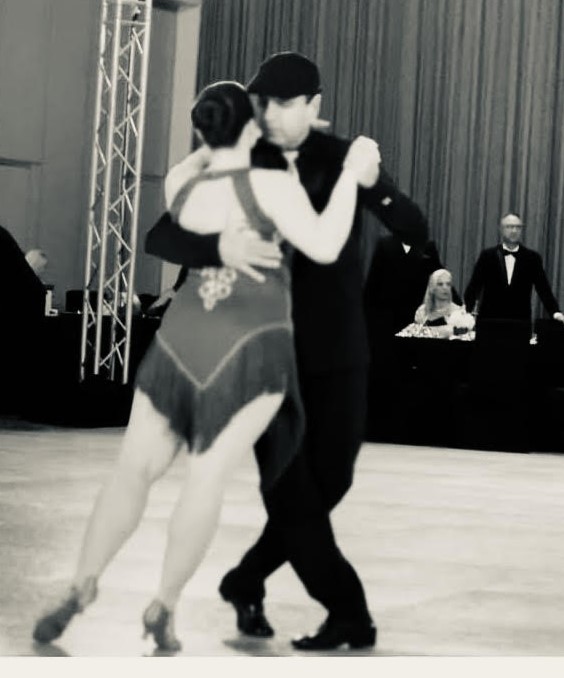
Practical Ways To Train Tango Musicality Connection
Theory is useful only if it turns into habit. The good news is that you can build tango musicality connections through small, focused exercises that do not require a huge amount of time. The key is consistency and attention rather than intensity.
By combining solo practice, partner exercises, and real experience at practicas or milongas, you will slowly rewire the way you move and listen. Instead of defaulting to memorized patterns, your body will start to respond directly to what it hears and feels in each moment, which is the true essence of tango musicality connection.
Solo Exercises To Feel Music In Your Body
Solo practice lets you isolate parts of tango musicality connection without worrying about another person. Put on a song and walk alone, focusing only on stepping on the main beat. Then, on the next track, try stepping every second beat, or adding occasional double time steps. Each variation teaches your body how to express rhythm in a clear, controlled way.
You can also explore upper body movement by standing in place and letting your chest and spine gently respond to the melody. Even without any steps, this builds internal tango musicality connection, because you are teaching your body to translate sound into sensation. Later, when you add a partner, this sensitivity will naturally flow through the embrace.
Partner Drills For Shared Timing
Partner drills are where tango musicality connection becomes clearly visible. One simple exercise is to choose a song and agree that you will only walk and pause, nothing else. Leaders choose when to move and when to rest, followers pay careful attention to how those decisions are signaled through the chest and arms.
Another drill is to dance a full track using only one or two figures, such as walking and forward ochos. With fewer options to think about, both partners can focus entirely on tango musicality connection: how each move fits the phrasing, how the energy rises or falls, and how comfortable the embrace feels. This kind of focused restraint often produces surprising depth and softness in your dance.
Simple Weekly Practice Plan
To make progress steady rather than random, it helps to organize your practice. Here is a simple weekly plan you can adapt to your schedule that keeps tango musicality connection front and center:
- 1 session of solo walking practice to different orchestras
- 1 session of partner drills focusing only on walk and pauses
- 1 practica or social event where you commit to dancing simply but musically
- 1 short video review session to watch your posture and timing
- 1 quiet listening session where you study tango songs without dancing
- 1 focused embrace exercise where you and a partner work only on comfort
- 1 rest day to let your body and mind absorb new patterns
Even with limited time, a structured plan like this slowly builds tango musicality connection into everything you do. The steps you already know start to feel richer and more expressive, and you stop needing long memorized routines to enjoy complex musical moments.
Why Choose Tango Canada Academy
Choosing where to train can shape how your dance evolves for years. When your goal is to develop tango musicality rather than just memorize patterns, you need a learning environment that values listening, subtlety, and long term growth. Tango Canada Academy is dedicated to that kind of development, combining solid technique with deep respect for the emotional and musical roots of the dance.
From your first class, you will notice that the focus goes beyond steps. Lessons include walking drills, embrace work, and musical exploration designed to strengthen tango musicality connection in every tanda. Instead of racing from figure to figure, you learn how to feel the rhythm under your feet, how to breathe with the phrasing, and how to make even simple movements feel satisfying and expressive.
A Teaching Approach Built Around Musicality And Connection
The teaching approach at Tango Canada Academy treats tango musicality connection as a skill that anyone can learn with guidance and practice. Instructors break down complex ideas into clear, accessible exercises that fit beginners and experienced dancers alike. You are encouraged to ask questions about how movements feel, not just how they look, and to explore how tiny changes in timing or tone affect the embrace.
Regular classes are supported by practicas, workshops, and occasional specialty sessions that focus specifically on topics like phrasing, orchestra styles, or partner communication. This variety ensures that tango musicality connection is reinforced in multiple contexts, helping the skills you build in class transfer smoothly to crowded social floors and special events.
Programs For Every Stage Of Your Tango Journey
Whether you are taking your first steps or refining a long term practice, there is a program that fits your needs. Beginners learn core movement and embrace skills with musical awareness from the start, while more experienced dancers can use private coaching to sharpen their tango musicality connection for performance or competition.
Community events create a supportive environment where dancers of different levels share the floor and learn from one another. This mix keeps the focus on genuine connection and shared enjoyment instead of comparison. With clear pathways for growth and a strong emphasis on musical listening, Tango Canada Academy offers a consistent, nurturing place to explore your full potential in Argentine Tango.
Let The Music Lead Your Growth
You do not need a library of memorized routines to become a compelling tango dancer. What you truly need is a sensitive ear, a responsive body, and a genuine willingness to share the music with your partner. That is the heart of tango musicality.
By simplifying your practice, listening more carefully, and choosing environments that support musical and emotional growth, you give yourself the chance to experience tango as an evolving conversation instead of a fixed script. Tango Canada Academy is ready to guide you along that path so that each tanda feels more alive, more connected, and more uniquely your own. If you are ready to deepen your tango musicality connection, the next step is as simple as pressing play on a favorite song, opening your embrace, and letting the music show you where to go.
Frequently Asked Questions
- What Is The Best Way To Start Improving Tango Musicality Connection?
Begin with very simple walking and pauses. Dance full songs with just those tools and focus on placing each step clearly on the beat to build tango musicality connection from the ground up.
- Do I Need Natural Rhythm To Develop Tango Musicality Connection?
No. Listening regularly to tango music, clapping basic rhythms, and walking to the beat will gradually train your ear and body to feel tango musicality.
- Can Tango Musicality Connection Be Practiced Without A Partner?
Yes. You can walk, shift weight, and move your torso to the melody on your own. These solo drills make tango musicality connection much easier once you dance with someone.
- How Does Tango Musicality Connection Help Me In A Crowded Milonga?
It helps you choose small, clear movements that match the phrase instead of forcing big figures, so your dancing stays safe, respectful, and expressive in tight spaces.
- What Role Does The Embrace Play In Tango Musicality Connection?
The embrace carries musical changes from your body to your partner. A comfortable, responsive hold lets them feel timing, accents, and energy before each step.
- How Often Should I Practice To See Progress In Tango Musicality Connection?
Three short, focused practices per week that mix listening, solo walking, and a bit of partner work are usually enough to notice better tango musicality connection within a month.
- Will Focusing On Tango Musicality Connection Make My Dancing Less Impressive?
No. Clear timing, relaxed embrace, and expressive pauses usually impress partners and observers more than complicated sequences, so strong tango musicality connection makes your dancing stand out in a good way.


Comments are closed