



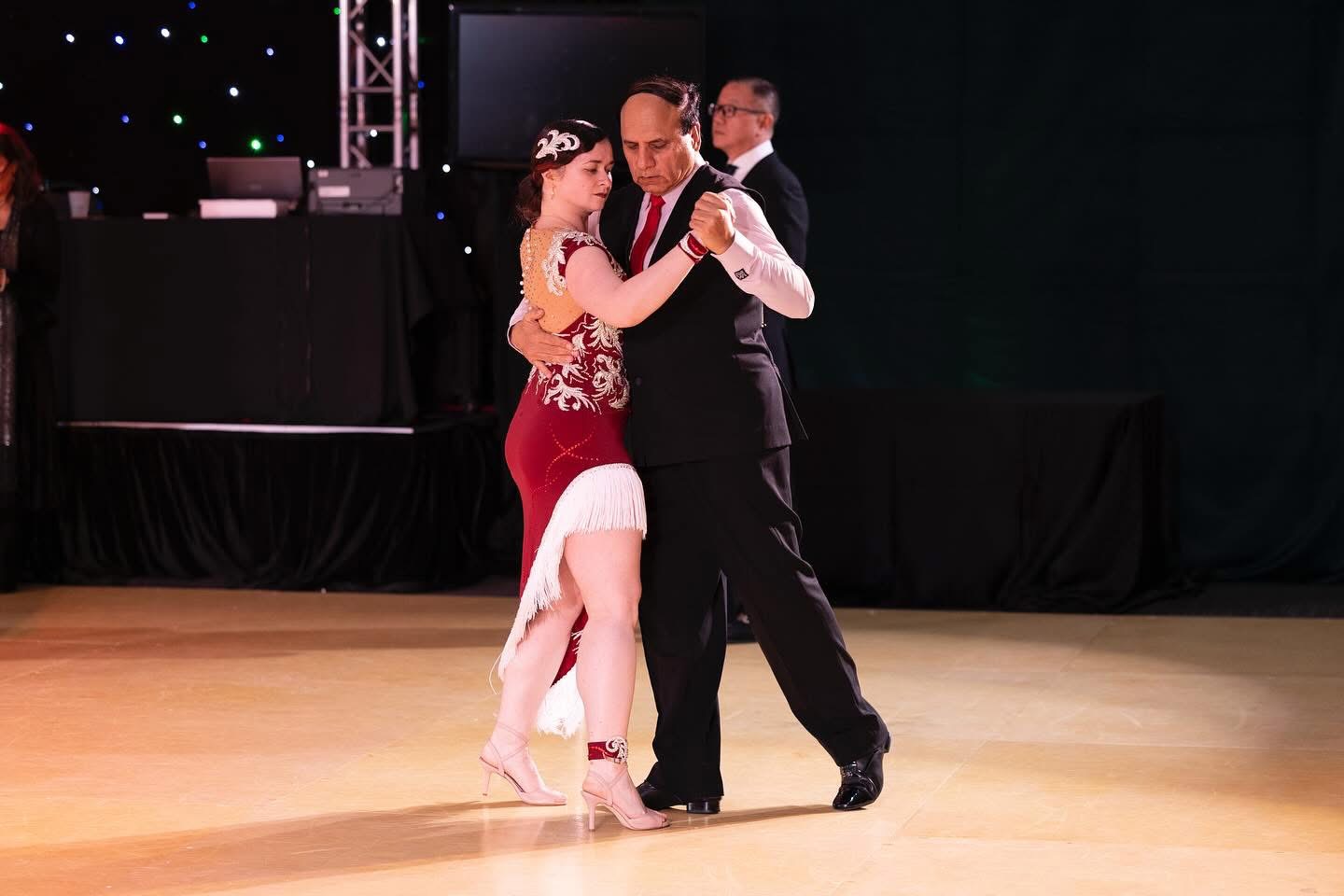
If you’ve ever watched a competition broadcast and then visited a traditional milonga in Buenos Aires, you’ve seen two dances that share a name but live in different ecosystems. In one corner stands ballroom tango with its sharp lines, bold head snaps, and codified figures for Standard/International and American styles. In the other, Argentine tango breathes in cafés and social halls, improvised and intimate. At Tango Canada Academy, we hear the question weekly: “Are they the same?” This guide clarifies what overlaps, what diverges, and how to choose the path that actually fits your goals—so you learn faster, feel better, and love your time on the floor.
Origins and Evolution
From ports to parlors
Argentine tango emerged in late–19th-century Río de la Plata barrios as a social dialogue between immigrants, Afro-Argentines, and criollo traditions. Its vocabulary grew inside crowded rooms and to live orchestras. Meanwhile, when tango reached Europe and North America, teachers formalized elements into ballroom tango to fit ballroom syllabi, pageantry, and competition rules.
Codification vs. improvisation
Argentine tango privileges improvisation—partners decide in real time based on music and embrace. Ballroom tango favors syllabus clarity: Bronze, Silver, Gold figures; heel leads and clipped timing; and standardized technique so adjudicators can compare couples. This doesn’t make one “truer”—it means ballroom tango and Argentine tango optimize for different outcomes.
Music: What Your Ears Expect
Orchestras vs. competition tracks
Social dancers often favor Di Sarli, D’Arienzo, Pugliese, and Troilo—each inviting a different quality of walk or pause. Competition couples in ballroom tango usually perform to edited or orchestral tracks with pronounced downbeats and dramatic breaks. That soundtrack supports the strong staccato feel audiences associate with ballroom tango.
Phrasing and pause
Argentine tango uses breath and silence as musical tools; the pause can be a highlight. In ballroom tango, timing is more metrically strict so shapes land cleanly for judges. You can, however, bring musical taste from one to the other—clarity in ballroom tango and phrasing sensitivity from Argentine tango both elevate performance.
Posture, Frame, and Embrace
The hold you wear
Ballroom tango employs a rigidly defined closed hold or American-style frame with offset connection, high tone, and head positions that project outward. The look is angular by design. The tango embrace in Argentine style is a living structure: open or close, breathing with the music, arms carried by the back rather than fixed elbows. These differences drive how steps are taught and how they feel.
Axis and weight
In Argentine settings, each partner guards individual axis for pivots and ochos, sharing weight only intentionally. In ballroom tango, the shared frame maintains a constant presentation to judges; weight changes are synchronized within the frame, and the topline is king. If your goals are competition photos, ballroom tango will deliver the silhouette you expect.
Footwork and Movement Quality
Step size and mechanics
Social floors are crowded, so Argentine dancers use compact steps, full collection, and variable cadence. Ballroom tango stretches lines across larger floors with heel leads, contra body movement, and pronounced body flight punctuated by sudden stops. That contrast is why beginners sometimes feel “lost in translation”: technique context matters whether you train for a milonga or ballroom tango.
Rotations and shapes
Argentine tango builds rotations with torso-led pivots (ocho, molinete) and micro-adjustments in the embrace. Ballroom tango highlights strong promenade shapes, closed positions, and syllabus elements like the corte, rock turns, and promenade link—each with precise foot placements. The clarity of ballroom tango shapes helps judges assess couples quickly.
Vocabulary and Syllabus
Improvised sentences vs. memorized grammar
Think of Argentine tango as conversation and ballroom tango as oratory. The former links small ideas on the fly, the latter deploys rehearsed phrases with controlled emphasis. In studio life, this means a Bronze syllabus in ballroom tango gives newcomers a predictable ladder, while social students in Argentine tango learn rules of navigation and musical options first.
Cross-pollination (used wisely)
Body awareness, balance, and posture transfer well between styles. What you should not transfer: forcing Argentine embraces into ballroom tango frames, or inserting ballroom tango head action into a milonga. Keep the aims straight and you’ll benefit from both.
Floor Craft and Etiquette
Lanes vs. lanes plus judges
Both worlds dance counterclockwise lanes. Argentine milongas add strict no-overtaking customs and compact shapes to protect the room. In ballroom tango, couples travel larger distances, and floor craft must also account for judges’ sightlines and heat management. If you switch floors, adjust step size and projection; courtesy translates even if figures don’t.
Attire and Footwear
Function follows goal
Heels and leather soles are common across both, but competition shoes for ballroom tango often feature stiffer shanks and higher heel heights for presentation. Social shoes prioritize comfort and pivot-friendly suede. Wardrobe follows the same logic: spectacle helps in ballroom tango; understated elegance suits milongas where the music—not sequins—takes the lead.
Training Paths: How to Choose
Start with your “why”
Do you want weekend socials, travel-friendly community, and musical conversation? Argentine may be your lane. Do you crave clear progression levels, showcase nights, and competitive structure? Ballroom tango might light you up. At Tango Canada Academy, we map your goals to a training plan so you never wonder whether you’re in the right room.
Time budgets and milestones
You can enjoy a first social within 8–12 weeks of Argentine classes if you practice. Earning comfort in ballroom tango Bronze can follow a similar timeline, but medaling at comps demands longer arcs: rounds, stamina, and coaching on presentation. Plan accordingly.
Technique Deep-Dive: Five Comparisons That Matter
1) The Walk
- Argentine: project—transfer—collect; step size flexes with room density.
- Ballroom tango: heel leads, strong staccato, and driving action with clipped timing.
2) The Embrace/Frame
- Argentine: adaptive embrace; information travels through the torso.
- Ballroom tango: codified frame; elbows and shoulder line define presentation.
3) Rotation
- Argentine: pivots initiated by the torso; ochos and molinetes are core.
- Ballroom tango: promenade turns, rocks, and picture lines with fixed foot charts.
4) Pause
- Argentine: silence is musical; suspensions bloom in close embrace.
- Ballroom tango: stillness is sculptural; freezes land on counts for judges.
5) Navigation
- Argentine: compact, courteous, eyes on traffic.
- Ballroom tango: larger travel with heat awareness; keep shapes judge-visible.
Ten Things Beginners Say (and How Pros Answer)
- “Can I learn both at once?” — Yes, if you keep goals separate; don’t mix frames.
- “Which burns more calories?” — Training load, not style, drives this. Rounds in ballroom tango are intense; crowded milongas tax balance.
- “Do I need special shoes?” — Pivot-friendly soles for both; competition heels for ballroom tango presentation.
- “Is one more romantic?” — It depends on your taste: whisper vs. exclamation point.
- “What about posture?” — Neutral and tall for both; don’t sacrifice comfort for shape.
- “Which is easier?” — The one you practice. Argentine rewards listening; ballroom tango rewards discipline.
- “How fast will I ‘look good’?” — In social settings, sooner. On the competition floor, expect a longer runway.
- “Will music confuse me?” — Learn pulse and phrasing first; then style-specific accents.
- “Can I switch later?” — Absolutely; foundations transfer if you respect context.
- “Where should I start?” — Try intro classes in each; your body will tell you which story you want to tell.
Building a Smart Training Week
Sample plan for social-first dancers
- 1 group Argentine class (walk, embrace, musicality)
- 1 practica (apply calmly)
- 1 short home drill (posture, pivot pulses)
Sample plan for comp-curious dancers
- 1 ballroom tango technique class
- 1 coached rounds session
- 1 cross-training slot (mobility/strength)
Repeat for eight weeks, then reassess goals and adjust.
Safety, Health, and Canadian Resources
Protecting your body
Warm ankles, mobilize hips, and keep step size honest. Both styles reward longevity over spikes in volume. If something pinches, shrink shapes and ask a coach.
Learn more with official resources
- Canada Council for the Arts — Dance (funding and programs that support dance participation and training)
- Canadian Heritage — Arts and Cultural Participation (national initiatives that foster cultural learning and community arts)
Exploring grants, festivals, and community projects can supercharge your journey—whether you favor social rooms or ballroom tango floors.
Choosing Teachers and Studios
What to look for
- Clear pedagogy in either style (not just charisma)
- Opportunities for feedback (video, notes, Q&A)
- Communities that feel safe and friendly
- Explicit navigation and etiquette lessons for socials
- Honest talk about timelines if you’re aiming at ballroom tango comps
Red flags
- One-size-fits-all frames across both worlds
- Pressure to dance big in crowded rooms
- Jargon without clear body cues
- No pathway to apply what you learn (no practicas, no rounds)
Why These Differences Matter to You
Picking a lane sets expectations. If your heart leaps at crisp shapes and medals, ballroom tango offers structure and spectacle. If you love late-night conversations in motion, Argentine gives you a lifetime of nuance. Knowing the difference prevents mismatched classes, wasted money, and frustration.
Historical Timeline at a Glance (Why the Split Happened)
- 1890s–1910s: Tango grows in Buenos Aires and Montevideo, mixing African rhythms, European salon dances, and local folk elements. Orchestra leadership and neighborhood styles differ but share an improvised core.
- 1910s–1920s: The dance tours Europe; stage interpretations emphasize drama for theater audiences. Teachers in Paris and London simplify and codify patterns for social clubs and exhibitions.
- 1930s–1950s: The Golden Age of tango music in Argentina fills dance halls; social navigation rules and the intimate embrace mature. In parallel, teachers in Europe and North America formalize timing, heel leads, and competition-friendly top lines.
- 1960s–1990s: Revival waves and touring shows sustain global interest. Syllabi and grading systems expand; federations refine technique language for judges. Meanwhile, milonga culture protects improvisation and musical nuance.
- 2000s–Today: Technology, festivals, and global communities cross-pollinate dancers. Many students sample both worlds and discover that clarity of goal is the real secret to progress.
Understanding this arc explains why expectations differ. Social codes and improvisation grew from dance-hall realities; competition shapes evolved from the need to compare couples under lights. Neither path is “less tango”; each is an answer to a different question.
Choosing a Path (or Blending Wisely)
Maya: The Community-First Social Dancer
Maya wanted late-night socials and conversation through movement. She focused on walking quality, breath, and close-embrace comfort. After three months she danced full tandas without worry; after a year she could adapt to crowded floors with ease. Her takeaway: a tiny step that feels like music beats a big step that feels like effort.
Vince & Lara: The Goal-Oriented Competitors
This couple loved structure and deadlines. They scheduled technique classes, weekly rounds, and seasonal coaching. They discovered that posture conditioning, stamina, and presentation mattered as much as figures. A small change—quiet elbows and a calmer shoulder line—lifted their marks immediately, proving that clarity under pressure wins judges before difficult choreography does.
Nora: The Cross-Trainer
Nora alternated social weeks and competition blocks across a season. She learned to “switch modes” on command: adjustable embrace, compact navigation, and micro-pauses at milongas; sharper shapes, consistent timing, and high tone in the ballroom form. The key was mental: she never tried to look the same everywhere, so progress in one world didn’t sabotage the other.
Drills You Can Steal (Five Minutes, Real Gains)
For Social Rooms
- Walk ribbon: Place a strip of tape on the floor and walk directly over it, one step every two beats. Focus on silent feet and full collection.
- Breath-lead pause: Dance four steps, then breathe out to suspend for a full phrase comma before walking again. Partners report instant comfort.
For Competitive Floors
- Topline timer: Hold your frame against a wall for 30 seconds at a time, twice per side. Keep neck long, elbows quiet, shoulders calm.
- Clip-and-go: Practice a six-figure mini-round with a metronome. Land freezes on count; release into travel on cue.
For Everyone
-
Quarter-turn pivots: Ten slow pivots each side, spine tall, knees soft. This single drill improves stability in any style.
Communities, Costs, and Staying Motivated in Canada
Training budgets vary. Social paths emphasize weekly classes, practicas, and occasional festivals—lower recurring costs, deeper community ties. Competitive paths add private coaching, travel to events, specialized shoes, and costume budgets. Either way, planning a season—events, rest weeks, and cross-training—prevents burnout.
Consider seeking local arts support and community programs (see the Canada Council and Canadian Heritage links above). Volunteering at events, sharing practice space, or organizing peer drills reduces expenses while expanding your network. Most importantly, celebrate small wins: one calmer pivot, one safer lane change, one tanda where you truly listened. Momentum, not perfection, carries dancers from curiosity to confidence.
Why Choose Tango Canada Academy
Tango Canada Academy is built to help dancers make informed choices and thrive. We emphasize foundations—posture, axis, musical listening—then map them to your chosen path. Want the intimacy and improvisation of socials? We’ll build your embrace and navigation. Curious about the lines and discipline of ballroom tango? We’ll outline a syllabus, footwork mechanics, and a seasonal plan so you know exactly how to progress.
What you’ll experience with us
- Progressive curricula that connect fundamentals to either social fluency or ballroom tango clarity
- Instructors with international teaching and performance experience who translate nuance into simple cues
- Weekly practicas, etiquette coaching, and music labs for social dancers
- Technique classes, mock rounds, and feedback loops for those exploring ballroom tango
- A supportive culture that values kindness, curiosity, and sustainable growth
Choose the Story You Want to Tell
Two dances; one word; endless joy. If you crave precision, pictures, and the thrill of a scoreboard, ballroom tango will feel like home. If you crave conversation, pauses that breathe, and community nights that stretch past midnight, Argentine awaits. Many dancers sample both; the wisest keep their goals and techniques aligned. Tango Canada Academy is ready to guide you—whichever floor you choose.
Take your first step today. Book an intro class, visit a practica, or schedule a consult about rounds. Whether your next chapter is social comfort or ballroom tango success, a clear start makes all the difference.
Frequently Asked Questions
1) Is ballroom tango the same as Argentine tango?
No. They share history but diverged in goals and technique. Argentine is improvisational and social; ballroom tango is codified for competition and showcases.
2) Can training in ballroom tango improve my Argentine dancing (or vice versa)?
Yes—posture, balance, and musical awareness transfer. Respect the context: don’t import a ballroom tango frame into a crowded milonga or force an Argentine embrace into competition shapes.
3) Which is better for beginners, Argentine or ballroom tango?
The “better” choice is the one that fits your goals. If you want socials and musical conversation, start Argentine. If you want structure and clear milestones, ballroom tango offers a syllabus path.
4) How long before I’m comfortable on the floor?
With weekly classes and practice, 8–12 weeks can yield basic social comfort. Competitive readiness in ballroom tango takes additional time for rounds, stamina, and presentation.
5) Do I need special shoes for ballroom tango versus Argentine?
Both prefer pivot-friendly soles. For comps, ballroom tango shoes often use higher heels and stiffer shanks for presentation; socials lean toward comfort and suede soles.
6) What music should I practice to for each style?
Argentine: classic orchestras (Di Sarli, D’Arienzo, Pugliese, Troilo). Ballroom tango: competition-friendly tracks with strong beats and breaks. Train your ear to both if you cross-train.
7) How do I decide where to study?
Try a beginner class in each. Ask about practicas or rounds. Choose the room that matches your aims, whether that’s social nights or ballroom tango competitions.


Comments are closed