


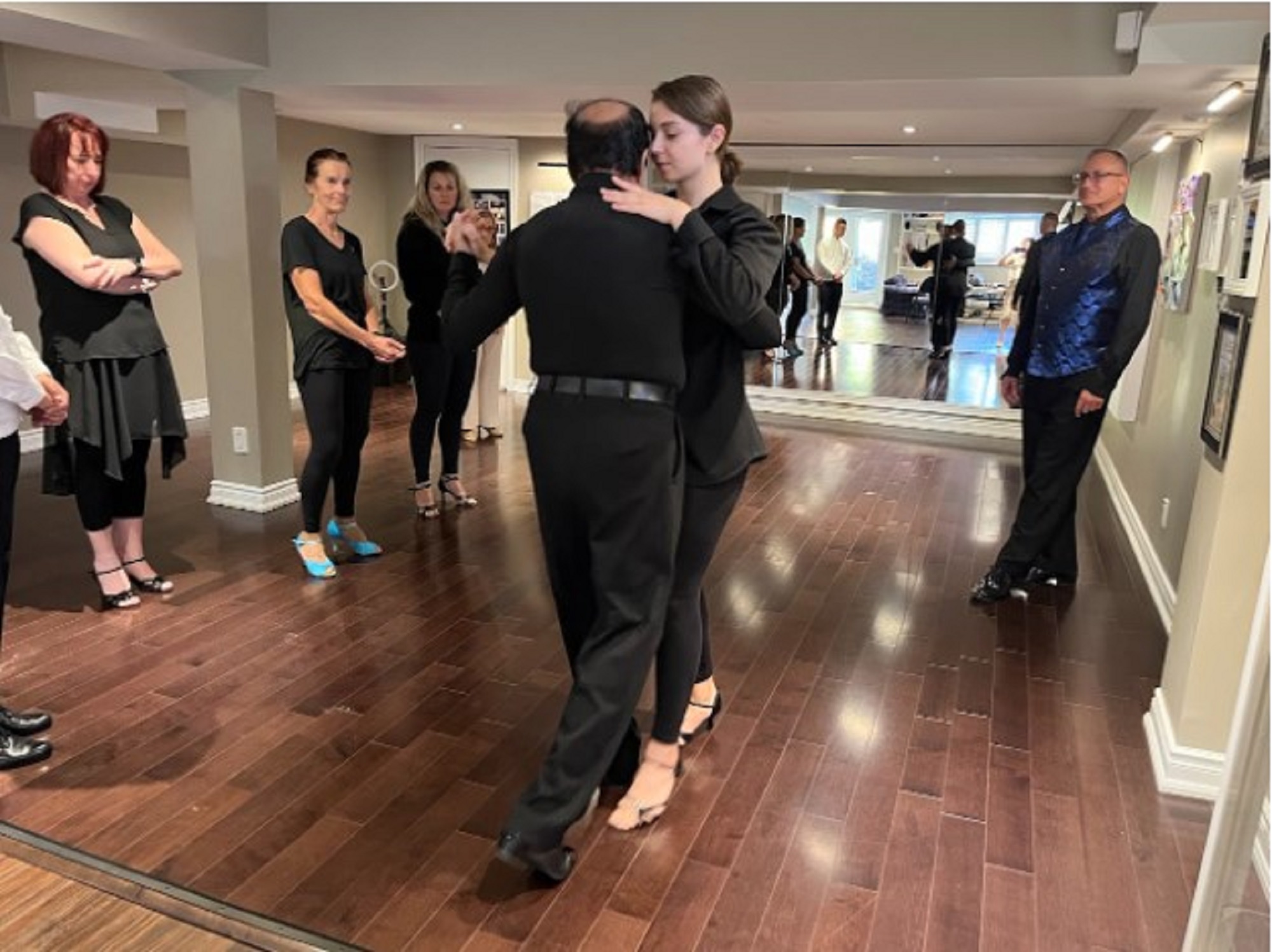
Argentine Tango often looks like a dance of dramatic figures, sharp pivots, and elegant decorations. Yet experienced dancers and teachers quietly agree that one simple skill sits underneath everything: the tango walk technique. When the walk is clear, grounded, and musical, even the most basic steps feel beautiful and every tanda becomes more enjoyable for both partners.
At Tango Canada Academy, we remind students from the first class that the path to graceful dancing runs straight through the tango walk technique, not around it. Working on the walk can feel simple, but it is the fastest way to improve balance, connection, and confidence. In this guide, you will see why the walk matters so much, how the tango walk technique shapes every part of the dance, and practical ways to train it at any level.
Understanding The Tango Walk Technique
At first glance, walking forward and backward might seem like the easiest part of the dance. In reality, the tango walk technique is a refined coordination of posture, axis, intention, and timing that takes time to build. A well trained walk carries your weight smoothly over your standing leg, lets your free leg reach with precision, and makes it easy to adjust your stride to both partner and music.
From the outside, a good tango walk looks effortless, but inside the body you are constantly organizing your spine, hips, knees, and ankles so that movement stays relaxed and precise. Professionals keep returning to simple walking drills because they know that every small improvement in the tango walk technique quietly upgrades pivots, turns, and all the figures built on top of it.
Why The Tango Walk Technique Is The Foundation
If you think of tango as a language, the tango walk technique is like clear pronunciation. You can learn advanced vocabulary and poetic expressions, but if the basic sounds are unclear, your message will always feel confusing. In the same way, every pattern in Argentine Tango is assembled from some variation of the walk, so any weakness in this base will repeat again and again inside more complex sequences.
A reliable walk also creates immediate confidence for your partner. When your steps are stable, predictable, and in tune with the music, the other person can relax into the embrace instead of bracing for surprises. Social dancers quickly notice who has invested time in the core mechanics of their walk and who is still trying to skip to the fancy parts without a strong foundation.
Elements Of A Strong Tango Walk Technique
A strong tango walk brings together several elements at once. Posture stays elongated but not rigid, with the chest gently inclined toward the partner. The hips remain free enough to allow the legs to swing under the body without wobbling the upper frame, and the core quietly supports the spine so that each transfer of weight is clean and deliberate.
Alongside posture and axis, the quality of the walk depends on clear foot placement and active use of the floor. You roll through the foot instead of stomping, use the toes to guide direction, and let the free leg move like a relaxed pendulum rather than a stiff stick. This attention to detail turns the tango walk technique into a kind of moving meditation that feels satisfying even without any complex moves.
How The Walk Shapes Partner Connection
Every moment in the embrace is influenced by how you place your feet. When both dancers pay attention to the fundamentals of walking, the connection feels steady and responsive instead of shaky or unpredictable. The embrace becomes a shared space where both bodies can relax, because the floor under each step feels reliable.
If the walk is inconsistent, partners often feel off balance or slightly behind the music, which leads to tension in the shoulders or arms as they try to compensate. In contrast, a smooth, grounded stride lets the intention travel from the center of the body down into the legs and outward into the floor. This makes the whole embrace feel lighter, even when the music calls for strong, energetic movement.
Axis, Balance, And Shared Stability
One of the first benefits of focusing on your walk is a stronger sense of axis. Axis is the vertical line of balance through the body that lets you turn, step, and pivot without wobbling. Walking drills train this awareness step by step, teaching you to land fully on each foot before launching into the next movement and helping you feel exactly where your weight is at every moment.
As both partners develop a better axis, they create shared stability in the embrace. Instead of leaning heavily on one another, they meet as two balanced bodies that choose to connect. This makes direction changes, suspensions, and playful dynamics much easier, because the couple can rely on both individual and combined balance while they explore the music together.
Embrace And Communication Through The Feet
Connection in tango is often described through the arms and chest, but the way you walk plays a huge role in how the embrace actually feels. When your feet move with clarity and intention, your torso does not need to push or pull to communicate. The direction and quality of each step travels through the frame in a subtle, pleasant way that your partner can sense and follow without strain.
Over time, dancers learn to use their walk as a quiet conversation. Small differences in stride length, timing, or energy send signals about whether the music calls for softness, intensity, or playful accents. This invisible dialogue is one of the reasons so many dancers fall in love with Argentine Tango: it shows how much feeling can be expressed through something as simple as a well placed step.
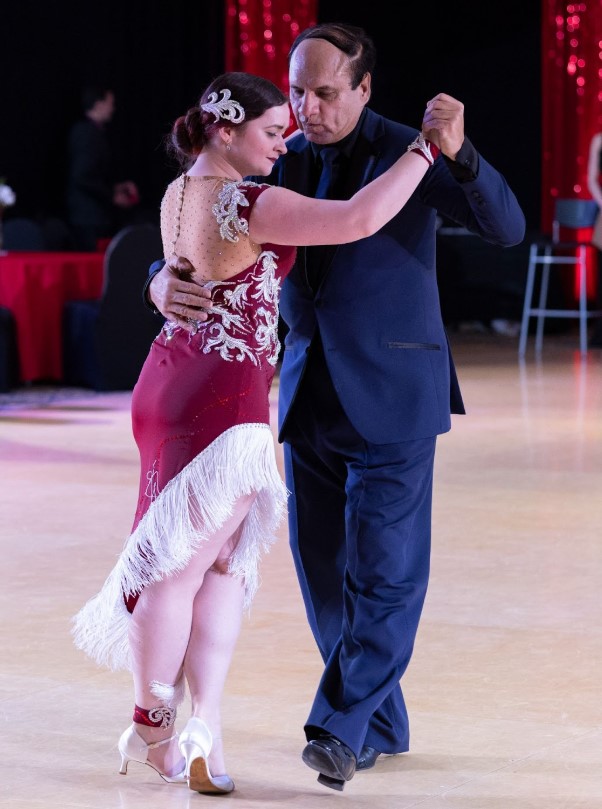
Musicality, Floorcraft, And The Tango Walk
Musicality does not begin with decorations or fast patterns. It begins with how you place each step on the beat. A clean walk allows you to match your weight transfers to the structure of the music, whether the orchestra invites bold, steady marching or gentle, elastic phrasing. When your walk is free and controlled, you can syncopate, pause, and glide in ways that feel natural instead of forced.
Floorcraft, the art of navigating a crowded ronda, also depends on walking well. If you can vary step size, direction, and energy without losing balance, you can adapt instantly to openings on the floor or sudden changes in traffic. This helps you respect the line of dance and the safety of nearby couples while still enjoying expressive choices that fit the music and mood of the room.
Walking The Music Instead Of Chasing It
Many beginners feel like they are always chasing the beat, especially when the music feels fast or complex. The solution is rarely to push harder or move faster. Instead, walking exercises teach you to feel the beat through your standing leg and center, so each step starts from a stable base. Once the rhythm is inside your body, you can place steps right on top of it rather than running to catch up.
As this internal timing grows stronger, dancers discover that simple walks can be incredibly expressive. A slight delay, a stretched step, or a shared pause can communicate emotion more clearly than a long sequence of figures. Learning to walk the music in this way turns your tango from a series of moves into a flowing conversation with the orchestra.
Navigating A Crowded Floor With Confidence
On a busy night, there may be very little space for large movements or athletic figures. Dancers who have trained their walk do not mind, because they can create a beautiful tanda within just a few tiles of floor space using compact steps and subtle variations. This ability is highly valued in social settings, because it keeps the ronda safe and pleasant for everyone.
Compact, controlled walking also protects your partner and neighbors from accidental bumps or kicks. When you know exactly where your feet and your partner’s feet are traveling, it is much easier to adapt when another couple suddenly stops or changes direction. Good floorcraft feels like magic from the outside, but it is built on the same careful attention to stepping that supports everything else in the dance.
Training The Walk In Practice
Knowing that the walk is important is only the first step. Real progress comes from consistent, mindful practice. Walking improves fastest when you work on it both inside and outside of class, with slow, focused steps instead of rushed repetitions. Building strong habits at a moderate tempo pays off later when the music feels faster, the floor is fuller, or your nerves are higher.
At Tango Canada Academy, practice sessions and classes often begin with simple walking drills to reset posture, axis, and attention. You will see beginners, experienced social dancers, and even teachers sharing the same exercises, because everyone understands that there is always another layer to discover in a single step. This shared focus builds a culture where fundamentals are respected rather than seen as something to leave behind.
Solo Drills To Develop Tango Walk Technique
Even when you do not have a partner available, there is plenty you can do on your own. Solo practice is one of the most effective ways to refine the tango walk technique, because it lets you concentrate entirely on your axis, foot articulation, and timing. Working in front of a mirror or along a wall can give you visual feedback on posture and help you notice small habits that may throw you off balance.
Try setting aside ten to fifteen minutes for a few simple ideas. Walk forward and backward slowly, counting several beats for each transfer of weight so that the tango walk technique has time to settle. Explore short side steps while keeping your shoulders level, or walk in a small square to practice direction changes. Pausing on one leg to test your balance and micro adjustments in the ankle also builds stability for the next time you step with a partner.
Partner Exercises For Shared Walking Quality
Partner drills help you bring solo discoveries into the embrace. Working in a close or open hold, you and your partner can agree to focus only on stepping for a full song, keeping the patterns very simple. The goal is to feel how your combined axis and stride affect the comfort of the embrace, rather than to show off what you know.
One useful exercise is to walk together in a straight line, then gently curve to follow an imaginary ronda. Both partners notice how each step lands and whether the shared walk feels smooth, synchronized, and relaxed. When something feels off, you pause, reset posture, and begin again without rushing. This patient approach builds trust and a deep understanding of how shared walking defines the entire dance experience.
Studying tango inside this supportive landscape connects your personal practice to a broader cultural story. Reports from Canadian Heritage describe how local arts and heritage programs give people across the country regular chances to participate in community festivals, performances, and workshops. When tango schools and events become part of that picture, the simple act of walking to music turns into a contribution to local culture as well.
For many students, this context adds meaning to nightly drills and quiet practice time. Knowing that efforts to improve your balance, posture, and musical walk also feed into a living arts scene can make the journey more rewarding. It becomes easier to stay motivated when you see tango as both a personal passion and part of a shared artistic life in Canada.
Why Choose Tango Canada Academy
Choosing where to learn is just as important as choosing what to learn. If you want your walk to feel natural, expressive, and partner friendly, you need a training environment that respects fundamentals and supports long term growth. Tango Canada Academy is dedicated to giving dancers a clear path from their first hesitant steps to confident movement on a busy social floor.
From your first class, you will notice that instructors take walking seriously. Instead of rushing straight into complex sequences, lessons start with posture, axis, and simple steps that work in real social settings. As your skill grows, those same clean steps support pivots, turns, and creative phrases, proving again and again that a strong walk is the safest way to explore the full vocabulary of the dance.
How We Build Technique From Day One
Our teaching method treats fundamentals as the heart of tango rather than a brief introduction. Classes begin with slow, mindful walking that encourages you to feel your weight, align your spine, and connect your breath with the music. These same principles then flow into linear and circular movements, molinete/ giros, and interceptions such as sacadas, enganches, barridas, and other moves so that nothing feels disconnected from the basic way you step.
Sudhir Gandhi, Principal Coach and Director, Tango Canada Academy is an experienced and certified Argentine Tango Instructor known for clear explanations, hands on guidance when appropriate, and practical imagery to help you understand what good movement should feel like, not just how it should look. By returning to walking throughout your training, you build a stable, adaptable foundation that can support any style or level of intensity you want to explore in the future, whether your goal is social dancing, performance, or competition.
Building Confidence Through Real Social Floors
Another advantage of studying at Tango Canada Academy is regular access to practicas and milongas where you can apply what you learn in real conditions. It is one thing to feel comfortable stepping in class and another to do the same in a crowded ronda with different partners and unfamiliar music. Guided social events close this gap by giving you time to experiment while still having teachers nearby for support.
As you attend more social dances, you will feel how much a calm, well organized walk contributes to connection, musicality, and floorcraft. Partners will often comment that it feels easy to move with you, and this positive feedback builds confidence more quickly than any mirror. Over time, you will discover that the quality of your walk is one of the main reasons you feel relaxed and welcomed in any tango community you visit.
Let Your Walk Lead Your Tango Growth
It is tempting to chase impressive moves and dramatic moments, but the longer you dance, the clearer it becomes that simple walking defines the whole experience. A well trained walk is where balance, connection, musicality, and floorcraft all meet. When your steps are steady and expressive, every other part of the dance has a solid place to stand.
By investing consistent time in walking, you give yourself a gift that will keep paying you back in every tanda, city, and partnership. Whether you are just beginning or refining years of experience, returning to the basics offers new layers of understanding. Tango Canada Academy is ready to guide you through that journey so that every step you take feels both effortless and deeply connected to the music.
If you are ready to see how much one simple change can transform your dancing, start with your walk. Join a class, attend a practica, or schedule a private lesson, and let your steps become the quiet power underneath everything you do in Argentine Tango.
Frequently Asked Questions
- Why Do Teachers Emphasize The Tango Walk Technique So Much?
Teachers emphasize the tango walk technique because every figure in Argentine Tango is built from walking, so weaknesses in this area will always show up somewhere in the dance. When you invest time in the tango walk technique, even simple movements become smoother, and both you and your partner feel more at ease. - How Long Does It Take To Improve My Tango Walk Technique?
Most dancers notice clear changes in their tango walk technique after a few weeks of regular practice, especially if they work slowly and mindfully. With several months of focused effort, the tango walk technique often begins to feel natural, and partners start to comment on how comfortable and stable your dancing has become. - Can I Practice The Tango Walk Technique At Home Without A Partner?
Yes, solo practice is one of the best ways to refine the tango walk technique, because it lets you focus on balance, posture, and foot articulation without worrying about another person. Walking slowly along a clear line in your home while paying attention to weight transfers is a simple, effective way to train the tango walk technique between classes. - Does Footwear Make A Big Difference For The Tango Walk Technique?
Footwear does make a difference, but it is not the only factor. Shoes that allow you to feel the floor and pivot without sticking will make it easier to refine the tango walk technique, especially as you begin to practice more often. However, the real foundation of the tango walk technique still comes from alignment, relaxed strength, and a clear sense of timing. - How Does The Tango Walk Technique Change Between Open And Close Embrace?
In both open and close embrace, the tango walk technique follows the same principles of clear axis and grounded steps, but the feeling is slightly different. In close embrace, the tango walk technique becomes more compact and subtle to protect the shared frame, while in open embrace you may have a bit more room for longer strides without losing connection. - What Is The Best Way To Get Feedback On My Tango Walk Technique?
The best way to get feedback on your tango walk technique is to combine guidance from experienced teachers with occasional video recordings of your practice. Instructors can point out details you do not feel yet, and watching yourself on video can reveal posture or timing habits that will help you refine the tango walk technique more quickly.
- Will Focusing On The Tango Walk Technique Make My Dancing Look Less Interesting?
Focusing on the tango walk technique will not make your dancing look less interesting, because smooth, confident walking actually looks and feels more elegant than forced complexity. Once the tango walk technique is strong, you can add decorations and advanced figures as accents, knowing that the core of your dance is already expressive, musical, and enjoyable for your partners.


Comments are closed