



Argentine Tango is often the first style people discover when exploring partner dancing. Argentine Tango is known for its rich cultural history, close connection between partners, and expressive movement that allows dancers to interpret music in their own way. Although many people recognize tango from competitions or stage performances, not everyone realizes that Argentine Tango and Ballroom Tango are two distinct styles with different techniques, traditions, and purposes.
If you are planning to learn tango dance, understanding these differences can help you choose the style that best matches your interests. While both forms share common roots, each offers a unique experience through movement, posture, musical interpretation, and partner communication. This guide explains how these styles developed, how they differ, and what beginners should know before starting lessons.
Understanding the Definition of Tango
Before comparing both styles, it helps to understand the definition of tango.
Tango is a partner dance that originated in the late nineteenth century in the regions surrounding Buenos Aires, Argentina, and Montevideo, Uruguay. It developed through the blending of European, African, and South American cultural influences. Today, tango is recognized around the world for its expressive movement, musical interpretation, and close partnership.
Although the foundation remains the same, different forms of tango have evolved over time. The two most recognized styles are Argentine Tango and Ballroom Tango.
The Origins of Argentine Tango
Argentine Tango developed as a social dance rather than a competitive one. It was danced in neighbourhood gathering places where people came together to enjoy music and connect with others.
The emphasis was never on performing for an audience. Instead, dancers focused on communication, balance, and interpreting the music together. Because of this, every dance feels slightly different. Partners improvise their movements instead of following a fixed routine.
This freedom remains one of the defining features of Argentine Tango today.
How Ballroom Tango Developed
Ballroom Tango evolved after tango gained popularity in Europe during the early twentieth century. Dance instructors adapted the original social dance into a standardized format suitable for competitions and formal ballroom instruction.
Unlike Argentine Tango, Ballroom Tango follows a structured syllabus with specific techniques, positions, and figures. Dancers often perform dramatic movements with sharp head positions and precise timing.
This standardized approach makes Ballroom Tango well suited for competitive dancing and examinations.
The Biggest Difference Between the Two Styles
Although both dances share the same historical roots, their purpose differs significantly.
Argentine Tango focuses on improvisation and musical interpretation. Every movement responds naturally to the music and the connection between partners.
Ballroom Tango places greater emphasis on consistency, technique, posture, and predefined figures. Movements are rehearsed to create a polished appearance during competitions and performances.
Both styles require skill, but they develop different dancing abilities.
Posture and Partner Connection
One of the easiest differences to notice is how partners connect.
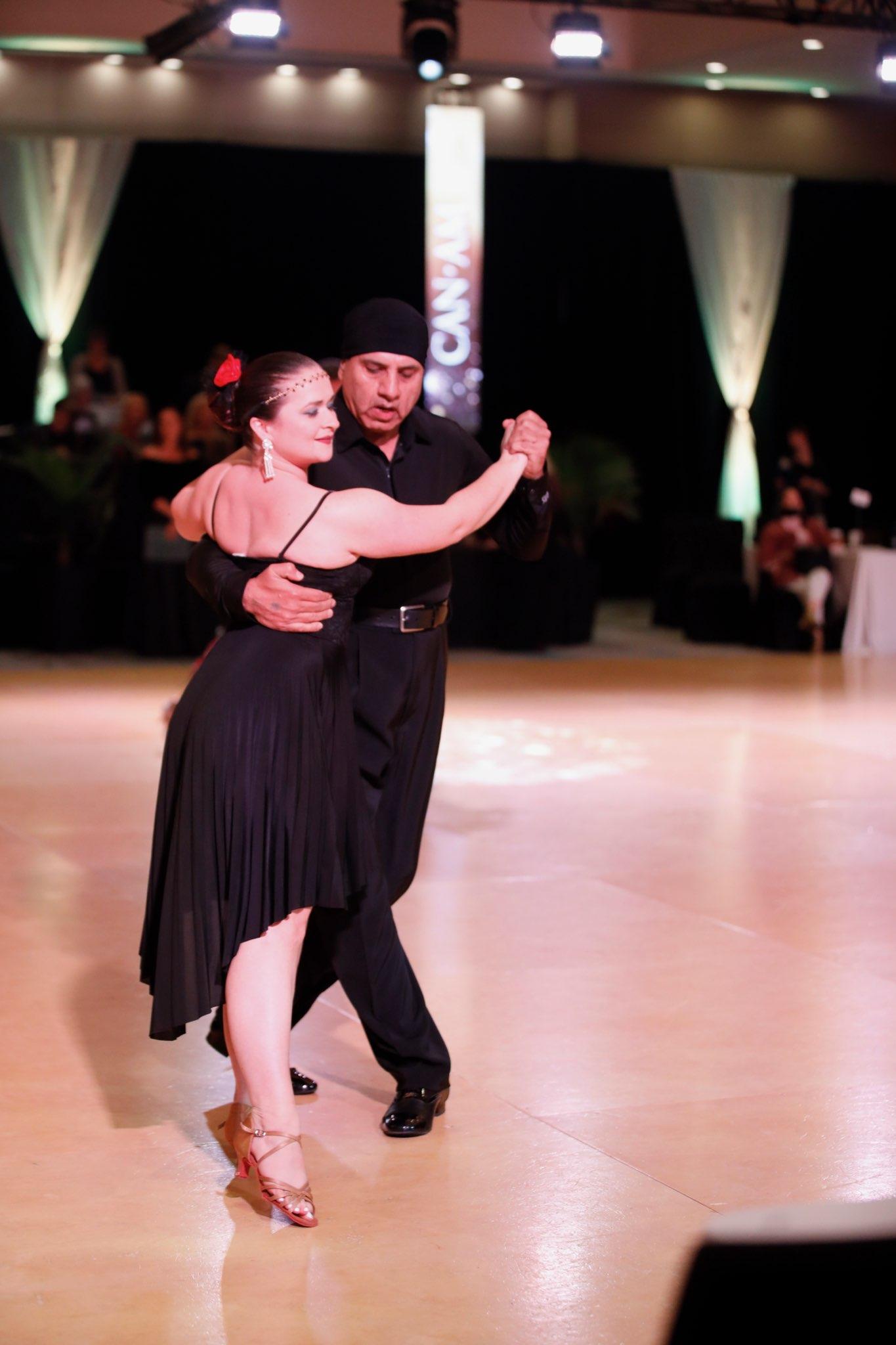
In Argentine Tango, dancers usually maintain a relaxed embrace. The distance between partners may change depending on the music and experience level, but communication remains the priority. Through tango dancing classes, beginners learn how to develop this connection while improving balance, timing, and partner awareness in a comfortable learning environment.
In Ballroom Tango, the dance frame is more rigid. Partners maintain a consistent position throughout the dance to support structured movements and competitive standards.
These different approaches influence how each dance feels for beginners.
Movement and Footwork
The movement quality also varies considerably.
Argentine Tango emphasizes natural walking. Many figures begin with simple walking steps that allow dancers to move comfortably around the floor while responding to the music.
Ballroom Tango features larger, sharper movements with quick direction changes. Dancers often produce a more dramatic visual effect through strong body shaping and precise foot placement.
Because of these differences, each style creates a unique appearance despite sharing common origins.
Music and Rhythm
Music plays an essential role in every tango dance.
Traditional Argentine Tango music often features expressive melodies performed by orchestras using instruments such as the bandoneon, piano, violin, and double bass. Dancers interpret pauses, rhythm changes, and emotional phrasing naturally.
Ballroom Tango music generally follows a more consistent tempo, making it easier for dancers to perform standardized routines.
Understanding musical interpretation becomes increasingly important as students gain experience.
Improvisation Versus Choreography
Improvisation is one of the defining characteristics of Argentine Tango.
Rather than memorizing long routines, dancers respond to each piece of music while communicating continuously with their partner. No two dances are exactly alike.
Ballroom Tango relies much more heavily on practiced choreography. Students learn specific figures that can be combined into routines suitable for competitions and demonstrations.
Neither approach is better than the other. They simply serve different purposes.
Learning Experience for Beginners
If you are new to tango dance, your first lessons will depend on the style you choose.
In Argentine Tango classes, instructors typically focus on posture, walking technique, balance, partner connection, and musical awareness before introducing more advanced figures.
Ballroom Tango lessons usually begin with a structured syllabus. Students learn specific steps, timing, and posture that gradually build into complete dance patterns.
Both learning methods provide strong technical foundations while developing different skills.
Comparing the Two Styles
The following comparisons highlight the most noticeable differences.
Argentine Tango
- Focuses on improvisation and musical interpretation.
- Encourages natural movement and partner communication.
- Emphasizes social dancing rather than competition.
- Allows flexibility in embrace and movement.
Ballroom Tango
- Uses structured choreography and standardized technique.
- Features dramatic posture and strong body shaping.
- Commonly performed in ballroom competitions.
- Maintains a consistent dance frame throughout the performance.
Exploring Argentinian Dance Styles
When people think about argentinian dance styles, tango is usually the first dance that comes to mind. However, Argentina has a rich dance culture that includes folk traditions such as Chacarera and Zamba alongside tango.
Among these traditions, Argentine Tango remains the most internationally recognized because of its expressive movement and cultural significance.
Learning about these dance forms helps dancers better appreciate the historical influences that shaped modern tango.
What Beginners Learn First
Most instructors introduce foundational skills before teaching advanced figures.
- Proper posture and body alignment.
- Walking technique and weight transfer.
- Lead and follow communication.
- Partner connection.
- Basic turns and direction changes.
- Musical awareness.
- Dance floor etiquette.
These fundamentals prepare students for more advanced movements regardless of which style they choose.
Benefits of Learning Tango
Both styles provide valuable physical and personal benefits.
- Improves balance and coordination
Learning controlled movement strengthens posture, body awareness, and overall coordination while developing confidence on the dance floor. - Builds communication skills
Partner dancing encourages trust, cooperation, and nonverbal communication, helping dancers develop stronger awareness of movement and timing. - Enhances musical understanding
As students learn to interpret rhythm, melody, and phrasing, they develop greater appreciation for the music that guides every movement.
Which Style Should You Choose?
Choosing between the two depends on your personal goals.
If you enjoy creativity, improvisation, and social dancing, Argentine Tango may feel more natural. It offers flexibility and encourages dancers to interpret the music in their own way.
If you prefer structured lessons, polished technique, and competitive dancing, Ballroom Tango provides a clear progression through established figures and routines.
Many dancers eventually study both styles because each offers valuable skills that complement the other.
Conclusion
Although Argentine Tango and Ballroom Tango share common historical origins, they have evolved into two distinct forms of partner dancing. One emphasizes improvisation and social connection, while the other focuses on structure, precision, and competitive performance.
Understanding the definition of tango, learning about different argentinian dance styles, and exploring how dancers dance a tango can help beginners choose the learning path that best suits their interests. Whichever style you decide to pursue, both provide rewarding opportunities to develop musicality, coordination, confidence, and appreciation for one of the world’s most respected partner dances.
Frequently Asked Questions
What is the main difference between Argentine Tango and Ballroom Tango?
Argentine Tango focuses on improvisation, musical interpretation, and social dancing, while Ballroom Tango emphasizes structured choreography, formal technique, and competitive performance.
What is the definition of tango?
The definition of tango describes a partner dance that originated in Argentina and Uruguay, combining musical expression, communication, and coordinated movement.
Is Argentine Tango easier for beginners?
Both styles are beginner friendly. Argentine Tango emphasizes connection and natural movement, while Ballroom Tango follows a structured learning progression.
Can I dance a tango without previous dance experience?
Yes. Most beginner classes are designed for people with no previous dance experience and gradually introduce the essential skills needed to dance a tango confidently.
Are Argentine Tango and Ballroom Tango danced to the same music?
They share similar musical roots, but Argentine Tango often uses traditional tango orchestras with expressive phrasing, while Ballroom Tango commonly follows a more consistent rhythm suitable for standardized routines.


Comments are closed