


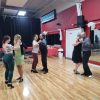
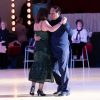
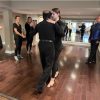

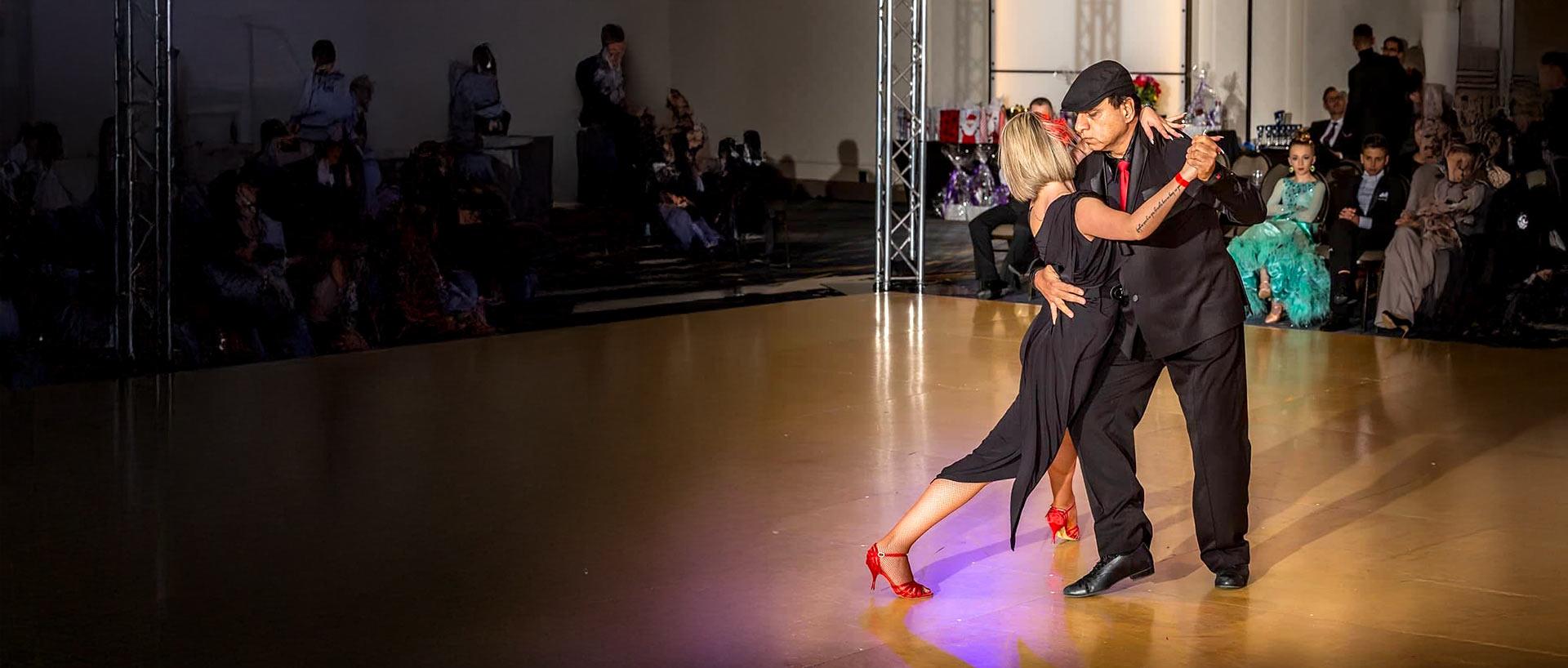
If you enjoy watching tango, you have probably seen both intimate social dances in crowded milongas and dramatic stage performances with big lifts, lines, and lights. It is natural to wonder what the real social vs stage tango difference is and whether you need to pick one path. The truth is that they share the same roots, music, and emotional core, but they serve very different purposes and are trained in very different ways.
At Tango Canada Academy, we help dancers understand where social vs stage tango overlap and where they clearly diverge so you can grow in a way that matches your goals. Some students want to feel comfortable at milongas with a beautiful walk, musical connection, and safe navigation. Others dream of theatrical shows and championships. Many enjoy a blend of both. This guide will walk you through the key distinctions in context, technique, training, and mindset so you can make informed choices about your own journey.
Understanding Social vs Stage Tango
When dancers talk about social vs stage tango they are really talking about two environments that ask different things from the same language. Social dancing happens in milongas and practicas, where the goal is to share comfortable tandas with many partners, respect the ronda, and express the music in a way that fits the room. The audience is primarily the partner and the couples around you. The floor is usually crowded, which shapes the way steps and shapes are chosen.
Stage tango, on the other hand, is built for viewers who are not dancing. The goal is to project the essence of tango outward so people in the last row can feel the story. Lines are bigger, shapes are clearer, and choreography is crafted to suit a specific piece of music and a specific stage. To really understand social vs stage tango, it helps to keep asking one question: who is this moment for. Social dancing is for the couple and the communal floor, while stage work is for the couple and the visible audience.
What Is Social Tango?
Social tango is an improvised partner dance built for shared music, connection, and continuous navigation in a shared space. The focus in social vs stage tango on the social side is comfort, safety, and musical sensitivity that adapts to different partners. Dancers walk, pivot, and turn within a lane, choosing simple figures that can be adjusted at any moment if the floor changes.
Because the room is filled with other couples, the embrace is usually more compact, leg lines are more contained, and adornos are small. The joy in this side of social vs stage tango comes from feeling how two people can breathe together with the music while also flowing with everyone else in the ronda.
What Is Stage Tango?
Stage tango is the performance focused expression of the same dance. In social vs stage tango on the performance side, the priorities shift toward clarity for the audience, dramatic contrast, and choreographic structure. Lifts, long lines, and large pivots are more common, because the couple has space and wants shapes that read at a distance.
Stage work does not abandon connection or musicality, but it packages them inside set sequences and clear arcs. In this dimension of social vs stage tango, dancers repeat and polish the same choreography many times, adjusting details so each phrase looks intentional under lights and in video.
Goals and Context in Social vs Stage Tango
Understanding the goals behind each environment is the fastest way to understand social vs stage tango as a whole. In a milonga, the purpose is to have multiple enjoyable tandas, respect etiquette, and share the floor gracefully. A good night is measured by how relaxed and connected the dances feel, not by applause. This context rewards subtlety, safe turns, and simple steps done with sensitivity.
On stage, the context changes everything. Social vs stage tango in a theater is about impact, memorability, and storytelling. Dancers must consider sightlines, timing with lighting cues, and the energy of different audiences. A good performance is measured by how clearly a story or mood is expressed, how clean the technique appears, and how the piece sits on the music from the first bar to the last.
Priorities on the Social Floor
On the social side of social vs stage tango, floor craft comes first. Dancers move counterclockwise, stay in lanes, and avoid overtaking. They choose step sizes that match traffic and keep their partner safe. The embrace must feel comfortable, which means tone and distance adjust to the partner and the room rather than to an imagined camera.
Social scenes also prioritize inclusivity. In this half of social vs stage tango, invitations are respectful, tandas are used to organize the night, and people often dance with many partners instead of one. Nights are built around connection and community, not performance pressure.
Priorities on the Stage
Performance work shifts the priorities. In the context of social vs stage tango for the stage, couples aim for consistency, projection, and cohesion. They need choreography that fits the music, highlights their strengths, and can be repeated with the same quality across multiple shows or competition rounds.
The embrace can open and close more dramatically to show lines, legwork, and lifts. Phrasing choices are planned so that freezes, suspensions, and accents land exactly on musical landmarks. The social vs stage tango difference here is that the audience, not the ronda, drives many of the artistic decisions.
Technique, Embrace, and Musicality
At a technical level, both forms share the same foundations: axis, weight transfer, pivots, and timing. The real social vs stage tango difference shows up in amplitude, emphasis, and what is considered safe or appropriate in a given room. Social dancers keep figures compact, protect their partner from collisions, and adjust to uneven floors or tight spaces. Stage dancers shape the same tools into larger designs, often with sharper angles and extended lines.
Musically, both sides rely on listening for pulse, phrase, and emotion. The social vs stage tango contrast comes from how structured the response is. Social dancers improvise moment by moment, while stage couples plan most of their musical choices in advance and refine them until they are repeatable.
Embrace and Space Choices
The embrace is a visible expression of the social vs stage tango difference. On social floors, a comfortable, breathable embrace that can adapt to different bodies is essential. Close embrace is often used to stay compact and to make subtle lead and follow work readable through the torso rather than big arm movements. The space around the couple is shared, so leg projections and sweeps must be controlled.
On stage, the embrace opens more often so that lines and movements can be seen clearly. In this side of social vs stage tango, partners might separate briefly, rotate in wider arcs, or use asymmetric holds that would be risky in a crowded ronda. The same underlying technique is there, but space and visibility change how it is displayed.
Musical Storytelling in Each Style
In musical terms, social vs stage tango share the same orchestras and structures, yet they emphasize different qualities. Social dancers might choose Di Sarli for long, smooth walks, D’Arienzo for playful rhythm, or Troilo for tender phrasing, then improvise within those moods. The storytelling happens inside the embrace, and small choices are often only visible to the partner.
Stage dancers, working within social vs stage tango performance demands, design arcs around big musical moments. They might plan a lift on a climax, a stillness on a sudden silence, or a series of fast turns on a rhythmic burst. The story is more explicit because it must reach the entire audience.
Training Paths for Social vs Stage Tango Dancers
Your training focus will depend on where you want to live inside the social vs stage tango spectrum. Everyone benefits from a solid social foundation that develops balance, connection, and navigation. Without that, even the most beautiful stage patterns will feel unstable. Social training builds timing and connection that never go out of style.
If you decide to move toward performance, you will add layers of conditioning, choreography work, and pressure testing. In this part of social vs stage tango, you train to deliver the same quality under lights, on different stages, and in different emotional states. It is not better or worse than social dancing. It is simply a different goal.
Building a Strong Social Foundation
A strong base in social vs stage tango begins with posture, embrace, walk, and basic figures like the cross, ochos, and molinetes. You learn how to start and end phrases, how to keep steps compact, and how to navigate in lanes. Group classes, practicas, and milongas are your main tools.
You also learn codes and etiquette, which are a central part of social vs stage tango on the floor. Cabeceo and mirada, tandas and cortinas, and gentle, clear refusals all keep the room respectful and relaxed. This foundation supports any future stage work because it develops listening, adaptability, and real world floor awareness.
Preparing for Stage Work and Competition
Once your base is stable, you can explore the performance side of social vs stage tango. This means working on choreography, projection, and larger shapes that still respect healthy technique. Rehearsals focus on repetition, consistency, and stamina. You often train lifts or complex figures in controlled conditions before ever trying them in costume.
Mental preparation also becomes important. In this slice of social vs stage tango you learn how to manage nerves, focus under pressure, and deliver on cue. Video feedback, run throughs on different floors, and mock performances are common tools as you shape a piece that can be shown to audiences and judges.
Key Differences at a Glance
It can be helpful to summarize social vs stage tango in a simple way so you can see the contrasts clearly. Both sides share history, music, and emotional tone, but they present them differently. Once you see these patterns, you can choose which aspects you want to emphasize in your own study.
The following list gives a quick overview of how social vs stage tango differ in practice. You will notice that many items are about context and priorities rather than entirely different techniques.
- Social focus: connection and comfort through several tandas. Stage focus: impact and storytelling for an audience.
- Social floors: crowded ronda with lanes and limited space. Stage floors: open space designed for big lines and travel.
- Social vocabulary: compact steps and safe figures. Stage vocabulary: amplified shapes and occasional lifts.
- Social timing: fully improvised within the music. Stage timing: largely set inside choreography.
- Social embrace: chosen for comfort and safety. Stage embrace: adjusted for visibility and design.
- Social success: a relaxed, enjoyable night of dancing. Stage success: a clear, memorable performance.
- Social training: group classes, practicas, and milongas. Stage training: coaching, rehearsals, and run throughs.
Seeing social vs stage tango side by side like this helps you understand that they are not competing systems, but different expressions of the same art.
Why Choose Tango Canada Academy
Tango Canada Academy is structured to support dancers on both sides of the social vs stage tango spectrum. Our beginner and intermediate programs emphasize posture, embrace, musicality, and navigation so your social foundations are solid. You learn to walk clearly, listen deeply, and make safe choices on real floors with real partners.
For students who want to move toward performance, we offer coaching that adapts those same foundations to the stage. This is where social vs stage tango training comes together in a clear plan. We work on choreography, projection, technique under pressure, and competition readiness, always respecting healthy mechanics and authentic musicality.
You will find a welcoming community, clear explanations, and practical drills that fit real schedules. Whether your dream is to feel at home in your local milongas, to appear in shows, or to explore both, Tango Canada Academy helps you navigate social vs stage tango without losing the joy that brought you to the dance in the first place.
Canadian Resources for Tango and the Arts
If you live in Canada, there are national resources that support dance, culture, and community projects. These can indirectly support your journey through social vs stage tango by helping studios, festivals, and artists create more opportunities to learn and perform. Many tango organizers explore grants and programs to bring workshops, live music, and performances to their cities.
Students who become more involved in events, teaching, or creative projects can also benefit from understanding how these systems work. The broader arts landscape can be a helpful backdrop to your study of social vs stage tango, especially if you are interested in production, choreography, or outreach.
You can start exploring national programs here:
- Canada Council for the Arts – Dance
- Canadian Heritage – Arts and Cultural Participation
These portals highlight how dance, including forms like social vs stage tango, fits into the wider cultural ecosystem.
Choosing Your Path in Tango
Once you understand the real social vs stage tango difference, you can relax about choosing the path that fits you today. You might decide that your heart belongs to intimate tandas in a friendly milonga where the priority is connection and community. You might feel drawn to the challenge of rehearsals, choreography, and stage lights. You might discover that you enjoy both in different seasons of your life.
What matters is that your training supports your goals. If you care most about social vs stage tango on the floor, invest in connection, embrace comfort, and navigation. If you feel pulled toward performance, keep those foundations and then layer on projection, structure, and pressure testing. Both paths can be deeply rewarding and can feed each other over time.
Tango Canada Academy invites you to explore these options in a supportive setting. You can start as a social dancer, experiment with a showcase, or train seriously for competitions. As you grow, the social vs stage tango distinction will stop feeling like a conflict and start feeling like a spectrum of choices inside one rich art form.
Frequently Asked Questions About Social vs Stage Tango
1) What is the main difference in goals between social vs stage tango
The main difference is the audience. In social vs stage tango, social dancing aims at shared enjoyment and comfort for partners on a crowded floor, while stage work aims at clear storytelling and visual impact for viewers who are not dancing.
2) Is the technique used in social vs stage tango completely different
The foundations are the same. In social vs stage tango you will see similar walks, pivots, and turns, but social dancing keeps them compact and safe for the ronda, while stage dancing amplifies shapes and lines for visibility.
3) Can I switch between social vs stage tango styles once I have trained in one
Yes, you can move between them. A strong social base helps you adapt quickly to performance, and stage training can refine your clarity and control when you return to social vs stage tango on the milonga floor.
4) Do I have to learn lifts if I want to explore stage work in social vs stage tango
No, lifts are optional. Many powerful performances in social vs stage tango use grounded, connected movement without aerial work, especially when safety, experience, or venue conditions make lifts less appropriate.
5) Which is better for beginners, social vs stage tango training
For most newcomers, social focused training is the best starting point. It develops balance, embrace, and musical listening that you need in every version of social vs stage tango, and it introduces etiquette and floor craft in a gentle way.
6) How does musical interpretation differ in social vs stage tango
Social dancers improvise their musical choices in the moment, while stage dancers plan and rehearse most of their phrasing. Both honor the music, but in social vs stage tango performance work must be consistent from show to show.
7) Can one teacher or school guide me in both social vs stage tango paths
Yes, if the program is designed for it. Tango Canada Academy, for example, offers foundational classes for social dancers and specialized coaching for stage or competition, so you can explore the full social vs stage tango spectrum within one supportive community.


Comments are closed